
The uncomfortable truth: smooth, anticipatory driving in city traffic delivers 5–15% fuel savings—about 2–6 MPG on a 30-MPG car—while most $20 hardware fixes might get you 0.5–2 MPG. I’ve seen drivers spend $200 on fuel additives and premium gas while ignoring underinflated tires that cost them 3 MPG every fill-up.
This guide ranks cheap fuel efficiency tips by real-world impact and cost, with numbers from EPA testing and real-world studies. You’ll know exactly what each fix saves and what it costs—no guessing, no marketing promises. If you’re tired of burning money at the pump, start with the tactics that actually move the needle.
Skip These First: The Expensive Wastes
Before we get to what works, let’s kill two expensive myths.
Premium fuel in a regular-octane engine: Unless your owner’s manual requires 91+ octane (most don’t), premium fuel wastes $0.30–0.50 per gallon with zero MPG benefit. EPA and Consumer Reports testing confirms no efficiency gain in vehicles designed for 87 octane. The “cleans your engine better” claim is marketing—Top Tier regular (Chevron, Shell, Mobil) already has detergent packages.
Aftermarket fuel additives: FTC and EPA reviews show bottled fuel-system cleaners and octane boosters don’t improve MPG in normally maintained cars. Professional fuel-injector cleaning costs $100–150 and works only for severely fouled injectors (rough idle, hesitation). The $12 bottle at the parts store is pure profit for the manufacturer.
Save that $40–60 per tank. The tips below deliver measurable returns.
1. Check Tire Pressure Monthly (and Inflate to Spec)
Cost: $0 (gas-station air or $25 tire gauge)
Impact: Recover 0.6–3 MPG if you’re currently underinflated
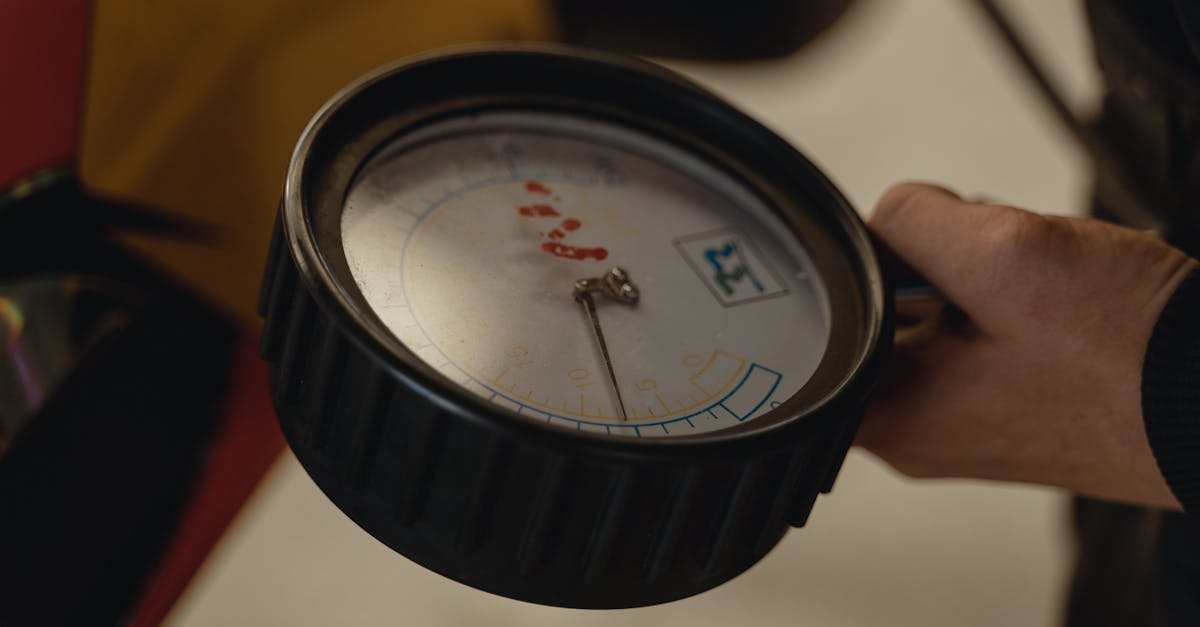
Every 1 PSI drop below your vehicle’s recommended pressure costs you 0.2–0.3 MPG, per fueleconomy.gov data. A set of tires 10 PSI low—common in cold weather or after a few months of neglect—can knock 2–3 MPG off your tank.
The correct pressure is on the driver’s door jamb sticker or your owner’s manual, not the max PSI stamped on the tire sidewall (that’s the tire’s structural limit, not your car’s spec). Check when tires are cold—before you’ve driven more than a mile—because heat from driving raises pressure readings.
I check mine the first Sunday of every month with a $20 digital gauge. It takes 90 seconds per tire and has saved me more fuel than any other single habit.
2. Drive Smoothly and Anticipate Stops
Cost: $0
Impact: 5–15% in stop-and-go traffic; 10–20% on highway if you drop from 70+ mph to 55–60 mph
This is the biggest lever you have, and it costs nothing. EPA testing shows fuel economy typically drops 15% at 65 mph vs. 55 mph, and gets worse past 70 mph because aerodynamic drag increases with the square of speed. In city driving, jackrabbit starts and hard braking waste fuel on acceleration you immediately throw away.
What “smooth” actually means:
- Accelerate gently—pretend there’s an egg under the gas pedal.
- Anticipate red lights and coast to a stop instead of racing up and braking hard.
- On the highway, use cruise control and stay closer to 60 mph than 75 mph when safe and legal.
Real-world studies show aggressive driving (rapid acceleration, hard braking) can reduce fuel economy by 15–30% or more in stop-and-go traffic. On a 25-MPG car doing 12,000 miles/year at $3.50/gallon, smooth driving saves $250–500 annually. No parts required.
3. Avoid Idling—Turn Off the Engine
Cost: $0
Impact: ~0.3 gallons per hour of idling (roughly 1 mile of driving per 10 minutes idling)
Modern fuel-injected engines use almost no fuel to restart. If you’re waiting more than 10 seconds—drive-throughs, curbside pickups, warming up the car—you’re better off shutting down. Remote starters are convenient but don’t improve this math; idling is idling.
Exception: don’t cycle the engine obsessively at every stoplight. The break-even is around 10 seconds for fuel savings and starter wear.
4. Consolidate Trips and Drive Warm

Cost: $0
Impact: 10–25% savings per trip (avoiding multiple cold starts)
Engines run rich (inefficient) until they hit operating temperature—about 5–10 minutes depending on outside temp. Three short trips from a cold start burn significantly more fuel than one longer trip covering the same miles. Plan your errands as a loop instead of separate runs.
In winter, this effect is even worse. A car that gets 30 MPG highway might see 18–22 MPG on a 2-mile cold-start errand in 20°F weather.
5. Replace a Clogged Air Filter
Cost: $15–50 DIY, $50–100 at a shop
Impact: 0.5–2 MPG if severely clogged; minimal if lightly dirty
A restricted air filter chokes airflow to the engine, forcing it to work harder. The impact is most dramatic on older or carbureted engines; modern fuel-injected cars adjust for reduced airflow, so the MPG hit is smaller but still real.
Check your air filter annually—more often if you drive dusty roads or deserts (I’m in Phoenix, so I check every 6 months). A clean filter is a 30-second visual inspection: hold it up to light. If you can’t see through the pleats, replace it.
Skip the cabin air filter for fuel economy—that’s for your comfort, not the engine’s breathing.
6. Use the Manufacturer-Recommended Oil Grade
Cost: $0–10 more for synthetic at oil-change time
Impact: 1–2% fuel economy if you’ve been using the wrong viscosity
Using heavier oil than your car specifies (e.g., 10W-40 when the manual calls for 5W-30) increases internal friction and costs you MPG. Check your owner’s manual and stick to that grade. EPA testing shows switching to the correct spec can yield 1–2% improvement—not huge, but it’s free if you’re changing oil anyway.
Synthetic vs. conventional doesn’t directly affect MPG (viscosity matters, not base stock), but synthetic tolerates longer intervals and extreme temps better. If your manual specifies synthetic, use it.
7. Get a Wheel Alignment if You’re Out of Spec
Cost: $75–200
Impact: 0.3–1 MPG if you’re severely misaligned
Misalignment increases rolling resistance—your tires fight each other instead of rolling straight. You’ll notice uneven tire wear, steering pull, or a crooked steering wheel after hitting a pothole or curb.
Don’t pay for alignment as preventive maintenance every oil change (that’s an upsell). Get it checked if you see symptoms or after suspension work. On a badly misaligned car, I’ve seen 1 MPG come back after a $120 alignment. On a car that’s barely out of spec, you’ll gain almost nothing.
8. Remove Roof Racks and Excess Weight

Cost: $0 (just unbolt the rack)
Impact: 1–2% highway penalty removed; another 1–2% for every 100 lbs of cargo removed
An empty roof rack creates drag even with nothing on it—EPA testing shows 1–2% fuel penalty at highway speeds. Loaded with bikes or a cargo box, the penalty jumps to 5% or more depending on size and shape.
Inside the car, every 100 lbs costs you roughly 1–2% fuel economy on a sedan (less on heavier trucks). Clean out the trunk: tools, sports gear, that bag of kitty litter from November. If you’re not using it this week, it’s dead weight.
9. Keep the Engine Tuned (Spark Plugs, O₂ Sensors)
Cost: $100–300 for spark plugs; $200–500 for O₂ sensors if faulty
Impact: 0.5–3% if severely neglected; minimal if already healthy
Worn spark plugs cause misfires and incomplete combustion. Fouled or failing O₂ sensors throw off the fuel-air mixture. Both kill MPG, but modern cars go 100,000+ miles between plug changes (older cars: every 30,000–50,000 miles depending on plug type).
Don’t replace plugs or sensors preventively unless you’re at the mileage interval or seeing symptoms (rough idle, check-engine light, hesitation). This is a “fix what’s broken” item, not a “tune-up special” upsell.
Safety note: If your check-engine light is on, scan the code first (AutoZone/O’Reilly will do it free). An O₂ sensor or misfire code points to a real problem; a loose gas cap is a $0 fix. Don’t guess.
10. Consider Low-Rolling-Resistance Tires at Replacement Time
Cost: $50–150 more per set of four vs. standard tires
Impact: 1–2% fuel economy over the life of the tires (40,000–60,000 miles)
LRR tires reduce friction between rubber and road. EPA data shows 1–2% real-world improvement vs. standard all-seasons—not dramatic, but it adds up over 50,000 miles. On a 30-MPG car doing 12,000 miles/year, that’s $20–40 saved annually at $3.50/gallon.
Only buy LRR tires when you need tires anyway. Don’t replace good tread early to chase 1% efficiency.
How Much These Actually Save (The Math)
Let’s assume a 28-MPG combined car, 12,000 miles/year, $3.50/gallon fuel:
| Action | MPG Gain | Annual Savings |
|---|---|---|
| Smooth driving (city-heavy) | +2–4 MPG | $200–400 |
| Tire pressure correction | +1–3 MPG | $100–300 |
| Avoid idling (30 min/week saved) | ~26 gal/year | $90 |
| Trip consolidation | +0.5–2 MPG equivalent | $50–200 |
| Air filter (if clogged) | +0.5–1.5 MPG | $50–150 |
| Correct oil grade | +0.3–0.6 MPG | $30–60 |
| Remove roof rack | +0.3–0.6 MPG highway | $15–30 |
The top two—driving habits and tire pressure—dwarf everything else. A driver who smooths out city driving and keeps tires inflated can realistically save $300–700/year with zero money spent.
Frequently Asked Questions
How much does proper tire pressure save on gas?
For every 1 PSI below your vehicle’s recommended pressure, expect to lose 0.2–0.3 MPG (EPA data). A set of tires 10 PSI low can cost you 2–3 MPG—$100–300 annually on a typical car. Check monthly when tires are cold.
Does an air filter really affect fuel economy?
Yes, but only when severely clogged. Modern fuel-injected engines compensate for restricted airflow, so the impact is smaller than on older carbureted cars—typically 0.5–2 MPG in heavy-restriction cases. Check annually; replace when you can’t see light through the pleats.
Is premium fuel worth it for gas mileage?
No, unless your owner’s manual requires it (most don’t). EPA and Consumer Reports testing confirms zero MPG benefit in engines designed for regular 87-octane fuel. Premium costs $0.30–0.50 more per gallon for no return.
Do fuel additives actually work?
Not for MPG. FTC and EPA reviews show aftermarket fuel additives don’t improve efficiency in normally maintained vehicles. Professional injector cleaning ($100–150) works for severely fouled injectors—but the $12 bottle at the parts store is marketing, not engineering.
Does weight reduction improve MPG?
Yes: every 100 lbs costs roughly 1–2% fuel economy on a sedan (less on heavier trucks). Clean out the trunk and remove roof racks when not in use. On a 30-MPG car, 200 lbs of junk costs $40–80/year in fuel.
Does using AC affect gas mileage?
At highway speeds (50+ mph), yes—AC draws 3–5% fuel penalty, but open windows create more drag than running the AC. On surface streets and parking lots, windows-down is more efficient. It’s counterintuitive, but aerodynamics win at speed.
Most of the cheap ways to improve gas mileage are habits, not hardware. Check your tire pressure this weekend, slow down 5 mph on your commute, and cut the idling—you’ll see the difference at the next fill-up. If you’re weighing whether your current car is worth keeping or trading up for efficiency, run the numbers in true cost of ownership calculator before you decide.
General information, not professional mechanical or financial advice. Consult your owner’s manual for manufacturer specifications.