
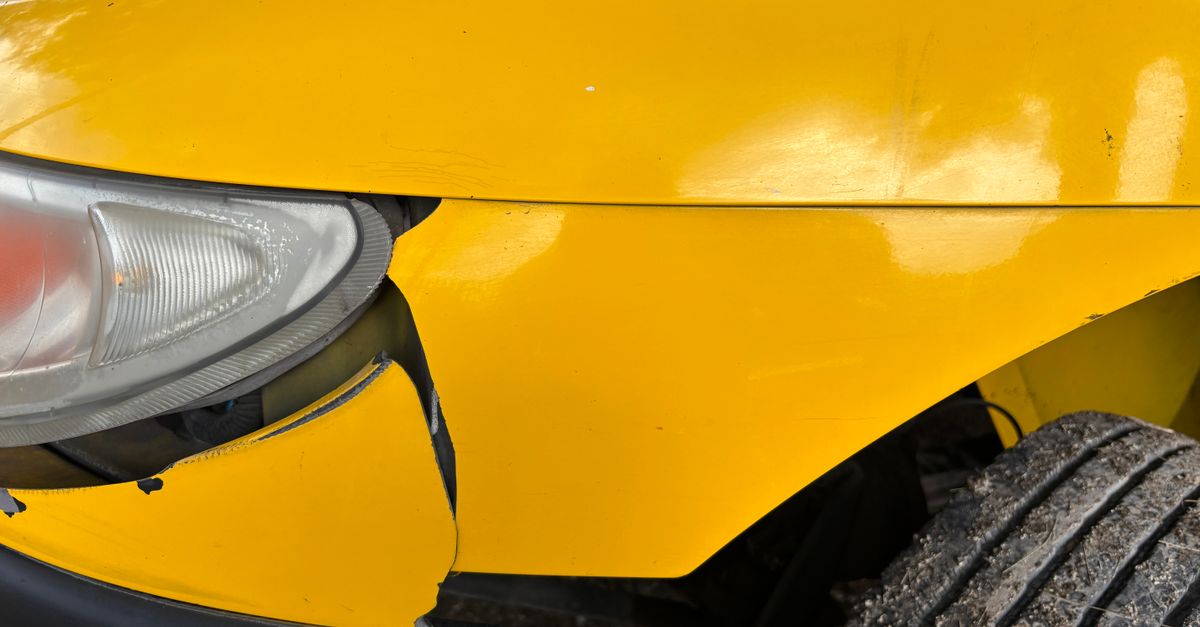
You back into a pole, scrape a curb, or come home to find someone clipped your bumper overnight. The dealer quotes $1,800. A body shop down the street says $650. Your insurance deductible is $500. Which number is real, and which option actually saves you money?
The short answer
Bumper damage repair typically costs $200–$1,200 depending on severity and location. Full replacement runs $600–$2,400. But those ranges hide the variables that matter: whether you’re in rural Montana or urban Los Angeles, whether you need OEM parts or can use aftermarket, and whether the damage you see is the only damage that exists.
What drives bumper repair costs
Three factors set the price floor and ceiling: labor rates, parts sourcing, and damage type.
Labor rates vary significantly by region and shop type. According to AAA’s automotive cost data, typical independent body shop rates run $50–$85 per hour in urban areas, $35–$55 in rural regions. Dealerships generally charge 30–50% more—typically $70–$120 per hour, and luxury dealerships can push $100–$150. The same two-hour paint job costs roughly $100 in a small-town shop and $240 at a metro dealer.
Parts costs split along OEM vs. aftermarket lines. An OEM plastic bumper cover typically runs $400–$750; aftermarket versions cost $200–$450. Add the reinforcement bar if damaged ($150–$400), sensors and brackets ($50–$250), and paint-plus-installation labor ($400–$1,200). Total OEM replacement: $700–$2,400. Aftermarket: $600–$1,800.
To make that concrete: a 2024 Honda Civic rear bumper OEM replacement typically costs $800–$1,100 for parts plus $400–$600 labor at an independent shop, or $1,200–$1,600 at a dealer. A 2023 Toyota RAV4 front bumper with parking sensors runs $1,100–$1,400 parts (OEM) plus $500–$800 labor and sensor recalibration. A 2025 Ford F-150 front bumper replacement hits $1,300–$1,800 parts and $600–$900 labor due to larger size and integrated camera systems. These examples reflect mid-2026 pricing; actual costs vary by supplier, region, and specific trim level.
Damage type determines whether you repair or replace. Shallow scratches and small dents are repairable. Cracks longer than three inches, structural damage, or sensor misalignment usually mean replacement.
Regional labor variation: the hidden cost multiplier
National averages obscure the real price differences. The same repair in Tulsa and San Francisco can differ by $400 because labor rates aren’t flat.
A typical bumper repair takes 2–4 billable hours (paint prep, color matching, application, and cure time add calendar days but not labor hours). At $35–$55/hour rural rates, that’s $70–$220 in labor. At $50–$85/hour urban rates, it’s $100–$340. Before parts.
If you live in a metro area and the damage is cosmetic, calling a shop one county over can cut your bill by 20–30%. If you’re comparing dealer quotes to independent shops, expect a 30–50% premium at the dealer for the same work.
Repair vs. replacement: the decision framework

Not all bumper damage looks like what it is. A crack in the plastic fascia might mean nothing, or it might mean the foam absorber behind it compressed and the metal reinforcement bar bent. Modern bumpers aren’t solid—they’re layered safety systems.
Here’s the structure: outer plastic cover (cosmetic), foam impact absorber (energy dissipation), metal or composite reinforcement bar (crash protection), and on newer vehicles, integrated sensors for parking assist and collision mitigation. A crack that penetrates past the plastic compromises crash safety. NHTSA bumper standards specify the reinforcement bar’s role in low-speed impacts; a bent bar won’t perform to spec in the next hit.
| Damage type | Repair cost | Replacement cost | Recommended action |
|---|---|---|---|
| Shallow scratch (paint only) | $200–$600 | $900–$2,400 | Repair |
| Dent, no crack | $150–$500 (PDR) / $300–$600 (traditional) | $900–$2,400 | Repair (PDR if available) |
| Crack under 3 inches, surface-level | $400–$800 | $900–$2,400 | Repair |
| Crack into reinforcement bar | N/A | $900–$2,400 | Replace |
| Sensor misalignment | N/A | $900–$2,400 | Replace |
| Multiple shallow scratches | $300–$700 (repaint) | $900–$2,400 | Repair if under 8 years old |
Paintless dent repair (PDR) saves 50–65% compared to traditional repair when the damage qualifies. A shallow dent with intact paint typically costs $300–$600 via PDR versus $800–$1,500 for conventional bodywork, sanding, and repainting. The catch: PDR requires a specialized technician who can access the backside of the panel and massage the dent out without removing paint.
Availability is uneven. Urban areas and college towns typically have multiple PDR specialists; rural areas often have none within 50 miles. The method doesn’t work on plastic that’s cracked, creased, or stretched—only on smooth dents where the paint hasn’t fractured. If your bumper is metal (rare on modern cars) or the dent is accessible from behind, PDR is the first option to check. If the tech says no, you’re back to traditional repair.
The insurance deductible trap: the real math
Collision and comprehensive coverage both cover bumper damage, but filing a claim isn’t always the cheapest path. Most policies carry a $500–$1,000 deductible. If your repair estimate is $600 and your deductible is $500, the insurer pays $100. You pay $500.
Then your premium increases. According to the Insurance Information Institute, a minor claim typically raises your rate by 5–15% for three to five years, depending on the insurer and your claims history.
Here’s the formula: annual premium × rate increase % × claim history window.
Example: You pay $1,200/year for auto insurance. Your bumper repair costs $700. Your deductible is $500. The insurer reimburses $200. Your rate increases 10% for three years.
- Out-of-pocket repair: $500 (deductible)
- Premium increase: $1,200 × 10% = $120/year extra
- Three-year total premium increase: $120 × 3 = $360
- Total cost via insurance: $500 + $360 = $860
- Total cost if you’d paid cash: $700
You spent $160 more by filing the claim, and that’s before considering future rate shopping limitations. Some insurers flag customers with recent claims during quote comparisons, reducing your leverage to switch carriers.
The decision point: claim if the repair cost exceeds your deductible plus $200–$300. Below that threshold, pay out of pocket. Reserve claims for repairs you genuinely can’t afford to self-fund, not just because “insurance should cover it.”
Run the math before you call your agent.
Aftermarket vs. OEM parts: savings and trade-offs

Aftermarket bumpers cost 30–40% less than OEM. The question is whether that discount comes with hidden costs.
| Component | OEM cost | Aftermarket cost | Notes |
|---|---|---|---|
| Plastic bumper fascia | $400–$750 | $200–$450 | Aftermarket fit and finish varies; paint adhesion can be inconsistent |
| Reinforcement bar | $200–$400 | $150–$300 | OEM recommended for structural integrity; aftermarket may not meet NHTSA spec |
| Sensors/brackets | $100–$250 | $50–$150 | Aftermarket sensors can require recalibration; OEM spec’d for exact alignment |
Aftermarket parts from established suppliers (LKQ, Keystone) generally fit well. No-name brands sourced online are hit-or-miss—panel gaps, misaligned mounting points, and paint that doesn’t bond properly are common complaints. Kelley Blue Book’s repair cost data tracks both OEM and aftermarket pricing; their estimates show aftermarket parts reduce total repair bills by 20–35% when installation quality is controlled for.
On older vehicles (8+ years), aftermarket makes sense if you’re keeping the car short-term. On newer vehicles with integrated sensors—especially luxury or safety-focused brands—OEM parts avoid recalibration headaches. Some shops won’t warranty aftermarket sensor installations because alignment tolerances are tight and failures aren’t always immediate.
Budget $100–$300 for sensor recalibration on high-end vehicles after bumper replacement, even with OEM parts.
Scratch repair options: paint, polish, or replace?
A bumper scratch fix depends on depth. If the scratch hasn’t broken through the paint to the plastic, you can buff or touch it up. If you see gray or black plastic, the clear coat and color coat are gone—touch-up paint might hide it from ten feet away, but it won’t look factory-fresh.
DIY touch-up paint costs $15–$30 for an OEM pen, $20–$50 for a color-matched spray can. Realistic outcome: visible in direct sunlight at arm’s length, acceptable from across the parking lot. Dark colors and metallics show touch-ups more than light solids. If the scratch is longer than three inches or the clear coat is peeling, skip the DIY route—you’ll waste time and money on a result that still looks damaged.
Professional scratch repair runs $200–$600 depending on the size of the area needing prep, paint, and blending. Shops sand the damaged section, prime it, apply color-matched paint, then blend the edges so the repair fades into the original finish. The result is invisible from three feet if done well.
When to replace instead of repair: If the bumper is faded, oxidized, or has multiple scratches across different sections, repainting might cost as much as a replacement. On bumpers older than ten years, the plastic often becomes brittle; a repaired scratch might crack again under light impact.
FAQ
How much does bumper damage repair cost?
$200–$1,200 for repairs (scratches, dents, small cracks); $600–$2,400 for full replacement. Cost depends on damage severity, regional labor rates, and whether you use OEM or aftermarket parts.
Should I replace or repair my bumper?
Repair if the damage is cosmetic—scratches, shallow dents, or surface cracks under three inches. Replace if the crack extends into the reinforcement bar, sensors are misaligned, or the foam absorber is compressed. Structural damage compromises crash safety.
Can you fix a scratch on a bumper?
Yes, if it’s paint-only. Buffing removes shallow scratches; touch-up paint or professional repainting handles deeper scratches. If the scratch exposes bare plastic, touch-up paint won’t match perfectly but can reduce visibility.
Is bumper repair covered by insurance?
Yes, under collision or comprehensive coverage, minus your deductible. File a claim only if the repair cost exceeds your deductible plus the expected premium increase ($200–$300 buffer). Minor repairs under $700 often cost less out-of-pocket than through insurance.
How long does bumper repair take?
1–3 days for paint repair or minor fixes (includes paint cure time). 3–7 days for full replacement due to parts lead time and paint curing. Luxury vehicles or rare colors may take longer if parts aren’t in stock.
The real cost of bumper damage isn’t just the repair bill—it’s whether you’re comparing fair quotes, whether your insurance saves or costs you money, and whether the fix you’re buying actually restores the safety system underneath the plastic. Run the regional labor math, check for hidden structural damage, and know when aftermarket parts are a deal versus a gamble.
General information, not professional mechanical or financial advice. Consult a certified body shop for structural damage assessment.