
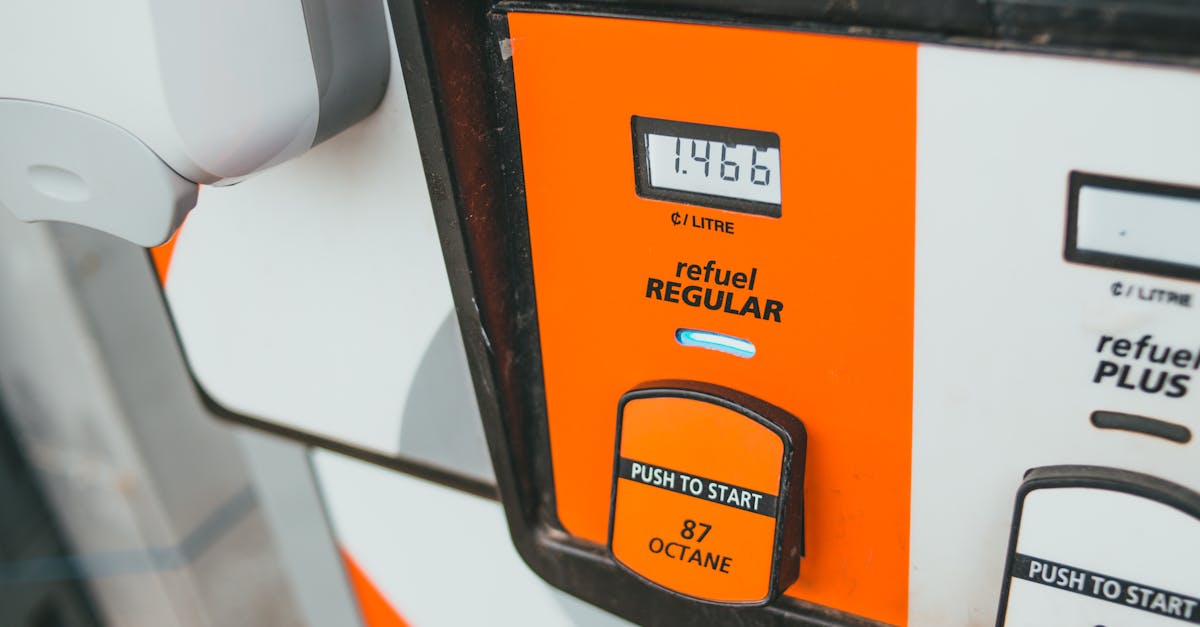
You’re at the pump, finger hovering over the 87-octane button, when doubt creeps in. The 91-octane premium costs fifty cents more per gallon, but what if your engine needs it? What if regular gas is slowly damaging something? The marketing says “premium performance,” and the internet is full of opinions.
The short answer
Octane rating matters only if your owner’s manual or fuel door says your car requires premium (typically 91+). For the vast majority of cars—Civics, Camrys, F-150s, most economy vehicles—premium fuel delivers zero performance benefit, zero engine protection, and zero improved fuel economy. You’re throwing away $150–250 per year for nothing.
What octane rating actually measures
Here’s the part most fuel marketing skips: octane rating has nothing to do with energy content, cleaning power, or how “premium” the fuel is. Regular and premium gasoline contain nearly identical energy—roughly 115,000 BTU per gallon. You’re not getting more bang for your buck.
What you are getting is resistance to engine knock, also called detonation. Inside your engine, the fuel-air mixture is supposed to ignite when the spark plug fires, right as the piston reaches the top of its compression stroke. But if the fuel ignites before the spark plug fires—triggered by heat and pressure alone—you get a shock wave that rattles through the cylinder. That’s knock. It sounds like marbles in a can, and if it’s severe or prolonged, it can damage pistons, valves, and cylinder walls.
Octane rating measures how much compression and heat a fuel can withstand before it ignites on its own. Higher octane = more resistant to premature ignition. That’s it. The number on the pump (87, 89, 91, 93) is the average of two lab tests—Research Octane Number (RON) and Motor Octane Number (MON)—which is why US pumps display “(R+M)/2.”
When octane rating matters: high-compression and turbocharged engines
Some engines are designed to extract more power by compressing the fuel-air mixture harder—compression ratios above 10:1—or by forcing in more air with a turbocharger or supercharger. These engines run hotter and build more pressure, which makes knock a real risk. To handle that, the engineers spec higher-octane fuel.
Examples of cars that require premium (91+ octane):
- BMW 3 Series and 5 Series (most turbocharged models)
- Mercedes-Benz C-Class, E-Class (turbo variants)
- Audi A4, A6 (turbocharged engines)
- Porsche 911, Cayman
- Ford Mustang GT (turbocharged models)
- Chevrolet Corvette
- Most Lexus and Acura performance models
Check your owner’s manual or the placard inside your fuel door. If it says “Premium Fuel Required” or lists 91 octane, your engine’s timing and fuel maps are programmed to assume you’re using high-octane fuel. Use regular, and the knock sensor—a small microphone bolted to the engine block—will detect the early detonation and tell the computer to retard (delay) the spark timing to prevent damage.
That sounds like a safety net, and it is. But here’s the trade-off: retarding timing reduces power and efficiency. A 2016 AAA study on turbocharged engines found that using 87 octane in a car designed for 91+ resulted in a 2–4% drop in fuel economy and noticeably reduced acceleration. Over time, running lean on octane can lead to carbon buildup, valve deposits, and wear on timing components. Fixing that—fuel system cleaning, carbon removal—runs several hundred dollars at a dealership.
So if your car says it needs premium, use premium. The knock sensor isn’t a free pass.
When octane rating doesn’t matter: standard-compression engines

Now for the good news: the majority of cars on US roads—Hondas, Toyotas, most pickup trucks, hybrids, minivans—are optimized for 87-octane regular fuel. These engines have compression ratios between 8.5:1 and 10:1 and are designed to run all day on regular without knocking.
Using premium in these cars accomplishes exactly nothing. The engine’s computer doesn’t have a “premium mode” to unlock. The fuel contains the same energy. The knock sensor has nothing to correct because there’s no knock risk in the first place. You will not see improved horsepower, better fuel economy, or longer engine life. Controlled testing by AAA and independent labs confirms this: power output and MPG variation between regular and premium in standard engines is less than 1%, well within measurement noise.
If you’ve been buying premium for a Civic, Accord, Camry, Corolla, RAV4, or similar vehicle “just to be safe,” you’ve been donating money to the oil companies. At typical regional pricing—regular around $3–3.50 per gallon and premium 30–50 cents higher—buying premium for 500 gallons per year costs $150 to $250 annually with zero return. Over a decade, that’s $1,500 to $2,500 you could have spent on maintenance that actually makes a difference.
Debunking common fuel myths
Myth: Premium fuel cleans your engine better
This one is everywhere, and it’s mostly wrong. Under EPA gasoline standards (40 CFR Part 80), all gasoline sold in the US—87, 89, 91, 93 octane—must contain a minimum level of detergent additives to prevent fuel injector and valve deposits. The detergent requirement has nothing to do with octane level.
Some premium fuels do contain extra detergents as a marketing differentiator, but so do many regular fuels. The real distinction is whether the fuel meets “Top Tier” standards—a voluntary program from automakers that requires higher detergent levels than the EPA minimum. Top Tier is available in both regular and premium at brands like Chevron, Shell, Mobil, BP, and Costco.
Translation: Top Tier 87-octane regular cleans better than non–Top Tier 91-octane premium. If you care about fuel system cleanliness, look for the Top Tier logo, not the octane number.
Myth: Premium fuel gives you more power
Not in a standard engine. Dyno testing is clear: if your car is designed for 87 octane, running 91 octane produces no measurable horsepower gain. The only time premium increases power is in high-compression or turbocharged engines designed to use it—and only because those engines have ECU maps that advance spark timing when they detect higher octane. Premium doesn’t retrofit a standard engine with more power. Physics doesn’t work that way.
Myth: Premium fuel improves fuel economy
Same story. Energy content is nearly identical across octane levels, and testing shows no statistically significant MPG improvement when running premium in standard engines. The tiny variation you might see—0.5 to 1%—is within the margin of error and easily swamped by driving style, tire pressure, and weather.
Where you do see fuel economy changes is when you run the wrong octane: using regular in a car that requires premium drops efficiency by 2–4% because of retarded timing. That’s a penalty for using low octane, not a benefit from using high octane.
The decision framework: check your fuel door and follow it

Here’s the only rule you need:
- Check your fuel door placard or owner’s manual for the octane recommendation.
- If it says “87” or “Regular Fuel,” use 87. Premium is wasted money.
- If it says “91” or “Premium Fuel Required,” use 91+. Skimping risks knock damage and reduced performance.
- If it says “Premium Recommended” (not required), you have a choice. Most modern turbocharged economy cars—Subaru Outback XT, Ford EcoBoost models—list 87 as acceptable and 91 as optional for slightly better performance. Unless you’re doing track driving or towing heavy loads, stick with 87 and pocket the savings.
Your owner’s manual is written by the engineers who designed the engine. They did the math. Follow it.
What about extreme conditions and older cars?
A few edge cases:
High altitude and extreme heat: At 7,000+ feet elevation or in desert heat, fuel vaporizes more easily, which can cause knock even with the correct octane. If you hear pinging during hard acceleration in the mountains or in 110°F weather, the issue isn’t octane—it’s vapor pressure and air density. Let the engine cool, avoid wide-open throttle, and consider mid-grade (89 octane) as a temporary buffer.
Pre-2000 cars: Older engines had less sophisticated knock sensors, and some were calibrated more aggressively. If you own a pre-1995 car and the manual says 87, use 87. If it says premium, don’t experiment with regular—older knock detection systems weren’t as forgiving.
Ethanol blends: Most US gasoline is E10 (10% ethanol), which slightly increases octane—87-octane E10 performs closer to 89. E85 (85% ethanol) has an octane rating above 100 but only works in flex-fuel vehicles and delivers 20–30% worse fuel economy due to ethanol’s lower energy density. Don’t use E85 unless your car explicitly says “Flex Fuel.”
FAQ
Can I use regular gas in a car that requires premium?
No, not safely. Your knock sensor will retard timing to prevent damage, but you’ll lose power, efficiency, and risk long-term carbon buildup and valve deposits. Fixing that can cost hundreds of dollars. Just use the octane the manual specifies.
Does premium gas make your car faster?
Not unless your car was designed to use it. High-compression and turbocharged engines gain power from premium only if their ECU is programmed to advance timing for 91+ octane. Standard engines see zero power gain. Premium doesn’t unlock hidden horsepower.
Is premium gas worth it?
Only if your manual requires it. For standard engines, premium is a $150–250/year waste with no performance, fuel economy, or longevity benefit. For high-compression engines, it’s non-negotiable—but you’re buying the correct fuel, not a luxury upgrade.
Why is premium gas more expensive?
Refining higher-octane fuel costs more—it requires blending different hydrocarbons to increase knock resistance—and supply is lower than for regular. Marketing plays a role too. But “premium” doesn’t mean “better” unless your engine needs the knock resistance. It’s not a product upgrade; it’s a specification.
Do premium fuel additives really clean your engine?
Slightly, but detergent content is separate from octane. All US gasoline has EPA-mandated detergents, and Top Tier brands (available in regular and premium) have extra cleaning agents. If you want cleaner injectors, buy Top Tier regular, not non–Top Tier premium.
Octane rating matters when your engine is built for it. For the rest of us, the answer is simple: check the fuel door, use what it says, and ignore the upsell. If you’ve been buying premium for a standard engine, you just gave yourself a $150–250 annual raise. Spend it on maintenance that actually makes a difference.
General information, not professional mechanical or financial advice. Always consult your owner’s manual or a certified mechanic for vehicle-specific guidance.