
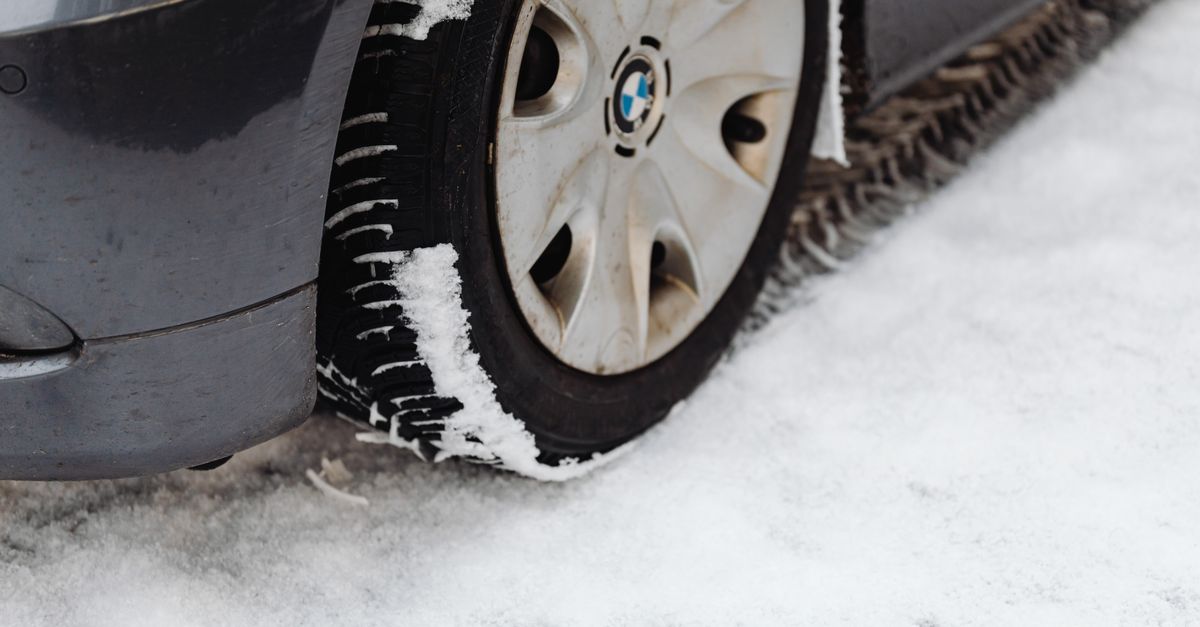
Your tire pressure drops roughly 1 PSI for every 10°F the temperature falls. That means a 30°F overnight cold snap in October costs you 3 PSI before you even notice — enough to trigger your TPMS light and cut your traction when you need it most.
Winterizing a car isn’t about running through a dealer’s multi-page checklist. It’s about catching the handful of things that actually fail in the cold — tires, battery, fluids — and skipping the upsells that don’t matter until spring. This guide prioritizes tasks by what prevents safety failures, gives you the specific numbers you need (not “check your pressure,” but what pressure and when), and tells you when your climate or vehicle age means you can skip a step entirely.
What Actually Fails in Winter (Priority 1: Safety-Critical)
These are the systems that quit in the cold or cause accidents if ignored. Do these first, before November if you’re in a freeze zone.
1. Tire Pressure and Winter Tires
Tire pressure drops with temperature. The NHTSA confirms that cold air contracts, and you’ll lose approximately 1 PSI per 10°F drop. If your door-jamb placard says 32 PSI and you’re parked at 70°F in September, expect 28–29 PSI by the time it’s 30°F in December.
What to do:
- Find your vehicle’s recommended tire pressure (driver’s door jamb or owner’s manual). That’s your baseline.
- In early fall, inflate to placard pressure or 2–3 PSI over. This accounts for winter loss without exceeding the tire’s max sidewall PSI.
- Check pressure every 2–4 weeks once temperatures drop, especially after overnight freezes.
- A $10 digital tire gauge is all you need. Gas stations offer free air; top up when cold (before you’ve driven more than a mile).
Do you need winter tires? Here’s the decision tree the tire industry uses but dealerships rarely explain clearly:
- Below 45°F regularly + snow/ice on roads: Winter tires grip better than all-seasons. The rubber compound stays flexible in freezing temps; all-season rubber hardens and slides. Not legally required in most U.S. states, but the difference is measurable. Tire Rack’s testing consistently shows 20–30% shorter stopping distances on ice with winter tires vs. all-seasons.
- Above 45°F most of winter, occasional freeze: All-season tires are fine. You’re trading slight cold-weather grip for year-round convenience. If you avoid driving in active snow/ice, you won’t notice the difference.
- Mild climate (rare freezing): Skip winter tires entirely unless you’re headed to the mountains.
Some dealerships will push winter tires on everyone. That’s a $600–1,200 upsell that makes sense in Minnesota, not in Atlanta.
Tread depth: The NHTSA’s legal minimum is 2/32”, but winter traction drops off a cliff below 4/32”. If your tread is at 3/32” or less, you need new tires before the freeze — winter or all-season, your call based on climate.
For more on measuring tread, see how to check tire tread depth.
2. Battery Health
Cold kills batteries. AAA’s testing shows a typical 12V battery delivers about 50% of its rated capacity at 0°F, compared to 100% at 80°F. If your battery is marginal in September, it’s dead in January.
What to do:
- Visual check (free, 5 minutes): Pop the hood. Look at the battery terminals. White or blue crusty buildup is corrosion. If present, disconnect the battery (negative terminal first, always), scrub terminals with a wire brush and baking soda solution, reconnect (positive first). Wear gloves; battery acid burns.
- Load test (free at most auto parts stores): If your battery is 3+ years old, get it tested in September or October. Costco, AutoZone, O’Reilly, and Interstate will test for free. If it fails or tests weak, replace it now. A new battery runs $100–150; a tow because you’re stranded costs $75–200 plus your morning.
- Replace proactively at 5+ years. Batteries don’t give warning. They work, then they don’t.
See car battery replacement guide if you’re swapping it yourself.
3. Coolant (Antifreeze) Protection
Coolant keeps your engine from freezing solid when parked overnight. If your coolant is weak or low, a hard freeze can crack your engine block — a $3,000+ repair that a $10 top-up would have prevented.
What to do:
- Check the freeze protection rating. Most 50/50 premixed coolant protects to about −34°F. If you’re in northern Minnesota, the Dakotas, or anywhere that hits −40°F, confirm your coolant is rated for it. The label on the jug tells you.
- Visual inspection (cold engine only — never open a hot radiator): Locate the translucent coolant reservoir under the hood. Coolant should be between MIN and MAX lines and should be bright green, orange, or pink (depending on type). If it’s rust-brown or below MIN, top up with the correct coolant type (check your owner’s manual; mixing types can cause problems).
- Full flush timing: Coolant doesn’t need seasonal replacement. Most vehicles go 30,000–100,000 miles between flushes. This is a top-up check, not a service upsell.
For detailed coolant maintenance, see car coolant flush or top up.
4. Oil Viscosity (Check Your Manual First)
Motor oil thickens in the cold. That’s why winter-grade oils exist — the “W” in 5W-30 stands for Winter, and the number before it tells you how well it flows at low temps. A 5W flows at lower temperatures than a 10W.
Do you need to change oil for winter? Most modern vehicles (post-2010) use a single year-round viscosity. Check your owner’s manual. If it specifies one oil (e.g., “5W-30 year-round”), you’re done. If it lists a seasonal switch (e.g., “10W-30 warm months, 5W-30 cold months”), follow that.
Don’t guess. Switching viscosity without OEM approval can affect fuel economy and engine wear. The SAE J300 standard defines viscosity grades, but your engine was designed for a specific range. Stick to it.
If you’re due for an oil change anyway, fall is a good time. Otherwise, seasonal oil changes are not required for most cars built in the last 15 years. See oil change diy guide for DIY steps.
5. Brakes and Brake Fluid
Cold weather doesn’t cause brake failure, but it exposes existing problems — rusty rotors, moisture in the fluid, worn pads. If you hear grinding, feel sponginess in the pedal, or see a brake warning light, stop driving and call a shop. Brakes are not a DIY diagnosis unless you know exactly what you’re doing.
What to do:
- Professional inspection if uncertain: A brake check costs $50–150 at most independent shops (dealerships charge more). Worth it if you haven’t had brakes checked in the last year or 15,000 miles.
- DIY confidence check: Press the brake pedal with the engine off. It should feel firm. If it sinks slowly or feels spongy, you likely have air in the lines or a fluid leak. Don’t drive it.
For pad replacement (advanced DIY), see brake pad replacement — but if you’re asking whether your brakes are safe, the answer is: pay someone to check.
Priority 2: Safety + Comfort
These won’t strand you, but they make winter driving safer and less miserable.
6. Wiper Blades and Washer Fluid
Wipers wear faster in winter thanks to ice, salt, and freezing rain. If your blades streak or skip, replace them before the first snow. Winter blades (the kind with a rubber boot over the frame) resist ice buildup better than summer blades.
Cost: $10–40 for a pair, depending on whether you buy OEM or aftermarket. Installation is tool-free on most vehicles (one clip, pull off, snap on new). See windshield wiper blade replacement for details.
Washer fluid: Use winter-rated fluid (labeled for at least −20°F, ideally lower if you’re in a freeze zone). Summer fluid or plain water will freeze in the reservoir and crack it. A gallon of winter fluid costs $3–7. Top up in October.
7. Lights (Headlights, Tails, Turn Signals)
Shorter daylight and bad weather mean you’re running lights more. Burnt-out bulbs are cheap ($5–30 each) and easy to replace, but dangerous if you don’t catch them.
What to do:
- Walk around your car with the lights on (park, headlights, high beams, turn signals, brake lights). If something’s out, replace it. Most bulbs are twist-and-pull; some require removing a panel. YouTube has a video for your exact model.
- Older halogen bulbs dim in extreme cold, while LEDs maintain brightness. If your halogens are 5+ years old and look dim, replacing them improves night visibility.
Priority 3: Nice-to-Have

These are comfort and longevity items. Do them if you have time and budget, skip them if you don’t.
8. Weatherstripping and Door Locks
Cracked weatherstripping lets cold air in and allows moisture to freeze your door locks shut. If your door seals are visibly dried or cracked, replacement costs $20–80 DIY or $100–300 at a shop.
Lock care: Silicone-based lock lubricant ($3–8) prevents freezing. Spray it into the keyhole and door latch in October. Do not use WD-40 — it attracts moisture and makes freezing worse.
9. Emergency Kit
Not part of “winterizing the car,” but worth mentioning: keep a blanket, flashlight, and ice scraper in the trunk. Jumper cables or a portable jump starter ($50–100) will save you a service call if the battery dies. I’m not your mom, but I’ve seen enough dead-battery tows in January to know this pays for itself.
Regional Variation: Does Your Climate Actually Require This?
Not every task applies to every driver. Here’s how to adjust based on where you live:
Northern climates (sub-freezing all winter, regular snow/ice):
- Do everything on this list. Winter tires are worth it. Battery testing is mandatory. Coolant protection to at least −34°F.
Moderate climates (occasional freezing, light snow):
- Tire pressure, battery, fluids, lights: yes. Winter tires: optional unless you drive in active snow. Weatherstripping: skip unless it’s already failing.
Mild climates (rare freezing, no snow):
- Tire pressure check, coolant verification, battery test if 3+ years old. Skip winter tires. Most other tasks are standard year-round maintenance, not winter-specific.
Mountain/high-altitude areas:
- Winterize even if your forecast looks mild. Elevation means freezing temps and ice even in “warm” states. Coolant protection and tire pressure checks are non-negotiable.
Check your state DMV or transportation department website for local winter tire laws. Quebec and some Canadian provinces require winter tires by law; most U.S. states don’t.
DIY vs. Shop: What You Can Skip Paying For

DIY-friendly (with basic tools and confidence):
- Tire pressure check and top-up (free at gas stations, $10 gauge at home)
- Wiper blade replacement ($10–40, tool-free)
- Washer fluid top-up ($3–7)
- Battery terminal cleaning ($0 if you have baking soda, $5 for a wire brush)
- Light bulb replacement ($5–30 per bulb)
- Coolant level check (visual only, cold engine)
Worth paying a shop:
- Battery load testing (free at most parts stores, so do it)
- Brake inspection if you’re uncertain ($50–150)
- Coolant flush if needed ($100–150, requires draining and refilling correctly)
- Oil change if you hate doing it ($30–75)
Never DIY if you see these warning signs:
- Grinding or squealing brakes
- Spongy brake pedal
- Brake warning light
- Coolant in the oil (milky appearance) or oil in the coolant
- Smoke from the hood
These indicate serious problems. Pay a professional.
Winter Car Maintenance Checklist (Printable Summary)
Before First Freeze:
- Check tire pressure, adjust to placard +2–3 PSI
- Test battery (free at parts stores); replace if 3+ years old and weak
- Verify coolant level and freeze protection rating
- Confirm oil viscosity matches owner’s manual winter spec (if applicable)
- Inspect brake pedal feel; schedule professional check if uncertain
- Replace wiper blades if streaking; top up winter washer fluid
- Test all lights (headlights, tails, turn signals, brake lights)
- Optional: weatherstripping check, lock lubricant, emergency kit
Every 2–4 Weeks in Winter:
- Check tire pressure (drops with temperature swings)
- Top up washer fluid (you’ll burn through it fast with road salt)
When to Call a Professional
If you’re not confident with any of the above, or if you encounter these scenarios, stop and call a shop:
- Grinding, squealing, or spongy brakes
- TPMS light stays on after topping up tire pressure (possible slow leak or sensor failure)
- Coolant or oil looks contaminated (rust, milkiness, or wrong color)
- Battery terminals are corroded beyond cleaning, or the battery is swollen/cracked
- Any warning lights on the dash you don’t recognize
A $100 inspection is cheaper than a $3,000 engine repair because you skipped a coolant check.
FAQ
What PSI should tires be in winter?
Inflate to the pressure listed on your vehicle’s door-jamb placard (or owner’s manual). In fall, add 2–3 PSI to account for winter cold without exceeding the tire’s max sidewall PSI. Expect to lose about 1 PSI for every 10°F temperature drop, so recheck every few weeks once it’s cold.
Do I really need winter tires?
Depends on your climate. If you see regular snow/ice and temperatures below 45°F, winter tires improve traction and stopping distance measurably. If you live in a mild climate or avoid driving in snow, all-season tires are safe and legal. Winter tires are not federally required in the U.S., but some northern states and Canadian provinces mandate them.
How often do I check tire pressure in winter?
Every 2–4 weeks, or whenever temperature swings 20°F or more overnight. Cold contracts air; your pressure can drop 3–4 PSI in a single cold snap.
What oil viscosity for winter driving?
Check your owner’s manual. Most modern cars use one year-round viscosity (commonly 5W-30 or 0W-20). If your manual lists a seasonal change, follow it exactly. Don’t guess.
When should I winterize my car?
Before your region’s first hard freeze — typically October or early November in most northern U.S. states. If you’re in a mild climate, mid-fall is fine. If you’re in the northern plains or mountain zones, do it in September.
Winterizing a car comes down to five systems that actually quit in the cold: tires, battery, coolant, oil, and brakes. Everything else is either comfort or a shop upsell. Check the numbers, skip the tasks that don’t apply to your climate, and don’t pay someone $200 to top up your washer fluid. If you’re not sure whether a task matters, prioritize the safety-critical list first and call a pro for anything that triggers a warning light.
This article provides general information about vehicle maintenance and is not professional mechanical advice. For safety-critical systems (brakes, steering, coolant), consult a certified mechanic if uncertain.