

Most dead-battery situations don’t need a jump—they need a replacement. A jumpstart works when your battery is weak but still functional (you left the dome light on overnight, it’s 20°F and the battery is sluggish). It does not work when the battery is sulfated, cracked, or completely dead from age. If your car won’t crank at all, or if the battery is more than four years old, you’re looking at a replacement, not a free jump.
Here’s how to tell the difference, execute the jump correctly if it’s worth trying, and avoid the mistakes that fry electronics or start fires.
Before you decide to jump: three questions
1. How does the car crank?
- Slow, labored crank: The battery is weak but may accept a jump. This symptom has the highest success rate—if you can hear the engine turning over slowly, a jump will usually work.
- Single click, no crank: The battery is likely dead. A jump sometimes works, but expect to replace the battery within days.
- No sound at all: Either the battery is completely dead or the starter motor has failed. Success rate is very low. Jump it once; if it doesn’t work, call roadside service.
- Cranks normally but won’t fire: The battery isn’t the problem—fuel, spark, or compression is. Jumping won’t help.
2. What’s the temperature? Below 32°F, battery chemistry slows down and available cranking power drops significantly, according to NHTSA winter safety guidance. Below 0°F, a jump often won’t work—the battery’s internal resistance is too high. If it’s that cold and the car won’t start, you’re better off replacing the battery than wasting time on a jump that might crack the case.
3. Do you have a stop-start or hybrid vehicle? Many newer cars (Toyota hybrids, some BMWs, Ford Escape Hybrids) either forbid traditional jumps or require specific procedures. Check your owner’s manual first. Some Toyota hybrids, for example, recommend against using another car’s battery and instead suggest a portable jump-starter. Ignoring this can damage the hybrid battery management system—a costly repair running into the thousands.
Consider a trickle charger instead
If your car cranks slowly but you’re not in a rush, a low-amperage trickle charger is safer and more reliable than a jump. Connect a 2-amp charger to the battery, leave it for 4–6 hours, and the battery will recover without the risk of voltage spikes, arcing, or hydrogen ignition that comes with jumping. This only works if the battery is weak, not dead—if you get no sound at all when you turn the key, the battery is too far gone and a trickle charge won’t help.
Trickle chargers are widely available at auto-parts stores and cost about the same as a decent set of jumper cables, but they eliminate the need for a donor car and the procedural risk of reversed polarity.
What you’ll need
Tools:
- Jumper cables (AWG 2 or 4 gauge; thicker is better—AWG 6 cables lose voltage over distance and can overheat)
- Wire brush (if battery terminals are corroded)
- Flashlight (if you’re doing this at night or in a garage)
Materials:
- A donor car with a healthy 12-volt battery
- Baking soda and water (optional, for cleaning corroded terminals)
Prerequisites:
- Both cars must have 12-volt batteries (pre-1970 and some commercial trucks use 6- or 24-volt systems)
- The donor car’s battery must be strong enough to start its own engine easily
Before you start: safety checks
Don’t jump a battery if:
- It’s visibly swollen, cracked, or leaking acid. Connecting cables will worsen the problem and risk fire or chemical burns.
- The terminals are heavily corroded (white, blue, or green crust). Clean them first with a wire brush and a baking soda solution; otherwise the jump won’t make a solid connection.
- You’re in an enclosed space (garage, trunk). Batteries release flammable hydrogen gas when charging; work outdoors in open air, as noted in Car Care Council safety guidance.
- It’s raining and the battery or cables are wet. Water can conduct current and cause shock or arcing.
Turn off everything: Both cars off, lights off, radio off, heater off. Accessories draw power and can cause voltage spikes when cables are connected.
Step 1: Connect the positive cable to the dead battery
Clamp the red cable to the positive terminal of the dead battery (marked with a + or a larger post). Wait two seconds. This gives the connection time to seat without arcing.
Step 2: Connect the positive cable to the donor battery
Clamp the other end of the red cable to the positive terminal of the donor battery. Wait two seconds.
Step 3: Connect the negative cable to the donor battery

Clamp the black cable to the negative terminal of the donor battery (marked with a − or a smaller post). Wait two seconds.
Step 4: Ground the negative cable to the dead car’s engine block
This is the step most guides gloss over, and it’s the one that prevents fires.
Clamp the other end of the black cable to an unpainted metal surface on the dead car’s engine or frame—not the battery’s negative terminal. Examples: a bolt on the cylinder head, the strut tower, or a bracket on the radiator support.
Why this matters: If you clamp directly to the battery’s negative terminal and there’s corrosion or a bad connection, the final cable connection can arc inside the battery and ignite hydrogen gas. Grounding to the engine block bypasses the battery terminals and is safer. AAA’s jumpstart guide recommends this grounding method for exactly this reason.
Step 5: Wait 30 seconds, then start the donor car
The 30-second wait allows the donor battery’s voltage to stabilize and ensures the dead battery isn’t shorted by a loose ground connection.
Start the donor car and let it idle for 2–3 minutes. This gives the alternator time to begin charging the dead battery before you add the load of cranking the engine.
Step 6: Start the dead car
Turn the key. The engine should crank within 3–5 seconds. If it cranks but doesn’t fire, wait another minute—the battery may not have enough charge yet. If it won’t crank at all after 5 minutes of donor-car idling, the battery is too dead to accept a charge; see more on car battery replacement cost and how long they last.
Step 7: Let both cars idle for one minute, then disconnect
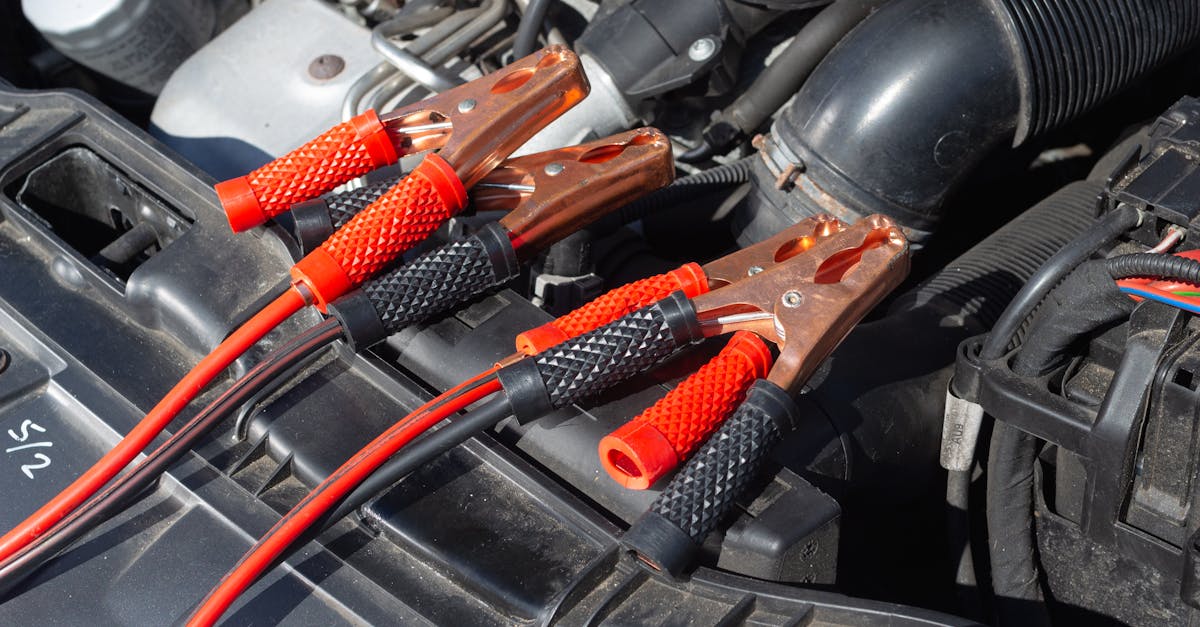
Leave both engines running for one minute to equalize voltage. Then:
- Turn off the donor car.
- Remove the black clamp from the donor battery.
- Remove the black clamp from the dead car’s ground point.
- Remove the red clamp from the donor battery.
- Remove the red clamp from the dead battery.
Reverse order. No shortcuts.
After the jump: the recovery protocol matters
This is where most people stop reading, and it’s why many successful jumps turn into dead batteries three days later.
Drive for 30+ minutes at highway speed. The alternator produces maximum charging current at 2,000+ RPM under steady load. Idling in a parking lot or driving two miles to the grocery store won’t fully recharge the battery. Highway driving does.
If the car dies again within two weeks, the battery is sulfated. A successful jump doesn’t mean the battery is healthy—it means the battery accepted enough charge to start the engine once. Sulfated batteries (common after deep discharge or age) lose capacity permanently; jumping them buys you days, not months. Replace the battery before you’re stranded somewhere worse.
If the car dies again within hours, the alternator isn’t charging. See Alternator Failure Signs and Replacement Cost for diagnosis steps.
When NOT to jumpstart
Skip the jump and call roadside service if:
- It’s below 0°F. The battery chemistry breaks down; the jump likely won’t work, and you risk cracking the case.
- The battery is swollen, cracked, or leaking. Connecting cables will make it worse.
- The car cranks but won’t start. The battery isn’t the problem—fuel, spark, or ignition timing is. See more on alternator failure signs and replacement cost if the alternator isn’t charging.
- You have a stop-start or hybrid vehicle and haven’t checked the owner’s manual. Some models forbid traditional jumps.
- The donor car’s battery is weak. If the donor’s headlights are dim or it struggles to start, it can’t provide the hundreds of amps needed to crank your engine. You’ll waste time and risk damaging both electrical systems.
Cost comparison: DIY jump vs roadside service vs replacement
| Option | Cost | When it makes sense |
|---|---|---|
| DIY jump (cables you own) | Free | Battery is weak but functional; you’re confident in cable order |
| Roadside jump (AAA member) | Included in membership (limited calls/year) | You’re unsure about procedure or it’s dark/raining |
| Roadside jump (non-member) | Service-call fee applies | One-time need; you don’t have cables or a donor car |
| Battery replacement | Varies by battery type and vehicle | Battery is 4+ years old, won’t hold charge, or fails a load test |
If you’re paying for non-member roadside service more than once a year, a membership pays for itself. If the battery fails a jump twice, stop trying and replace it—you’re burning time and risking a no-start in a worse location.
Modern vehicle exceptions
Stop-start systems (Ford, Mazda, BMW): Many require the engine to idle for 30 seconds before disconnecting donor cables, to stabilize auxiliary systems. Check your owner’s manual.
Hybrids (Toyota Prius, Honda Insight, Escape Hybrid): Some forbid traditional jumps entirely. Toyota’s owner resources, for example, recommend a portable lithium jump-starter instead of another car’s battery for many hybrid models. Violating this can damage the hybrid battery management system—a repair that can exceed the value of an older vehicle.
AGM batteries (luxury cars, newer BMWs/Audis): These batteries are more sensitive to voltage spikes. If you’re jumping an AGM-equipped car, make sure the donor car is off when you connect cables, and don’t rev the donor engine above idle.
When to call a professional
Call roadside service instead of attempting a jump if:
- The battery shows physical damage (cracks, leaks, swelling).
- You’ve never jumped a car before and you’re alone in the dark or rain.
- The donor car is also struggling to start.
- You’re not confident in the cable order—reversed polarity can fry the car’s computer and cost hundreds or thousands to repair.
- The car won’t crank even after 5 minutes of donor-car idling.
Jumping a car battery wrong can start a fire, destroy electronics, or leave you stranded in a worse spot. If you’re unsure, a service call is cheaper than the alternative.
FAQ
Can you jumpstart a car alone?
Yes, but it’s riskier. If a cable slips while you’re cranking the engine, you won’t have a second person to fix it before the starter motor draws full current and causes an arc. If you’re alone, double-check every connection before you turn the key.
How long does it take to jumpstart a car?
5–10 minutes to connect the cables, 3–5 minutes of donor-car idling, and the dead car should start within seconds of cranking. If it takes longer, the battery is likely too far gone.
What if the car still won’t start after jumping?
The battery is either completely dead (take it to an auto-parts store for a free load test) or the alternator isn’t charging. If the alternator is bad, you’re looking at a significant repair. See our take on this for diagnosis steps.
Can you damage your car by jumpstarting it wrong?
Yes. Reversed polarity (red to negative, black to positive) will fry the engine computer, the alternator diodes, and any module on the power rail—sometimes a very expensive repair. Loose cables can arc and start fires. If you’re not confident, don’t guess; call a pro.
Is it safe to jumpstart in the rain?
Only if the battery, terminals, and cables are completely dry. Water conducts electricity; if cables arc while wet, you risk shock or fire. If it’s pouring, wait for the rain to stop or call roadside service.
If the jump works, drive straight to an auto-parts store and ask for a free battery load test. If the battery is four years old or fails the test, replace it now—before you’re stranded in a worse spot. If the battery tests fine but the car dies again within a day, the alternator isn’t charging; see read more here for next steps. For winter-specific battery care and other cold-weather prep, check Winter Car Maintenance Cost: Fluids, Tires & Real Numbers.
General information, not professional mechanical or financial advice. Procedures vary by vehicle; consult your owner’s manual for model-specific jumpstart instructions, especially for hybrids and stop-start systems.