

Color alone doesn’t tell you if your transmission fluid needs changing. You need three things: what you see, what you smell, and how long it’s been since the last service. Dark fluid with no burnt smell and highway miles? Routine service. Dark fluid with a burnt smell and city driving? You’ve got a problem that costs $2,500+ if you ignore it.
Here’s how to read what you’re looking at—and what to do about it.
Why transmission fluid color varies by type
Not all transmission fluid starts out red. If you’re checking a CVT, you might see amber or even green-tinted fluid, and that’s normal. Older automatic transmissions use Dexron III or Mercon fluid—those are the bright red ones. Newer synthetics (Dexron ULV, Mercon ULV) look darker from the factory and last 50,000–100,000 miles instead of 30,000–60,000.
The mistake most people make: assuming all transmission fluid should be bright red. If you top off a Honda CVT with red ATF because “that’s what transmission fluid looks like,” you just bought yourself a $3,000 repair. Check your owner’s manual for the exact spec before you touch anything.
What each color means (and what it doesn’t)
| Appearance | Likely cause | What to do | Urgency |
|---|---|---|---|
| Bright red or pink | Fresh fluid, recent service | Nothing; normal | None |
| Reddish-brown | Aged fluid, normal oxidation from heat | Schedule service within 1–2 months | Routine |
| Dark brown or black | Heavy oxidation, heat damage, or overdue interval | Check for burnt smell; service within weeks | Schedule soon |
| Black + burnt smell | Internal friction wear, failing seals, overheating | Stop driving; tow to shop | URGENT |
| Milky or cloudy white | Water contamination (coolant leak, condensation) | Stop driving; potential bearing damage | URGENT |
| Foamy or bubbly | Air in fluid (low level, breather blockage, pump issue) | Top up; check for leaks | Schedule soon |
The burnt smell is the tell. If the fluid smells like a clutch burning or has an acrid, sharp odor, you’ve got internal damage—worn clutch packs, failing seals, or an overheating transmission. That’s not fixed with a fluid change. You’re looking at a rebuild or replacement.
Milky fluid means water is getting in. That happens when the transmission cooler (inside the radiator) fails and coolant mixes with ATF. Drive it in that condition and you’ll destroy the bearings. Tow it.
How to check transmission fluid the right way
Most transmissions have a dipstick, but many newer automatics and CVTs are sealed—no dipstick, no home check. If yours has one, here’s the process:
- Warm the engine. Cold fluid reads low; scalding-hot fluid reads high. Most manufacturers say “warm, not hot”—drive 10–15 minutes, then park.
- Park on level ground, engine running, transmission in Park (automatic) or neutral (manual). Set the parking brake.
- Pull the dipstick, wipe it clean, reinsert fully, then pull again. Read the level between the “full” and “low” marks.
- Check the color. Compare it to the chart above.
- Smell it. No smell = normal. Burnt or acrid smell = investigate immediately.
- Rub it between your fingers. Normal fluid is slick and pours freely. Gritty or sludgy texture means debris—worn clutches or bearing material.
If you can’t find a dipstick, check the owner’s manual. Some transmissions require a shop-level inspection (fluid temperature sensor, fill plug underneath, etc.). Don’t guess.
When to service vs. when to stop driving
Service soon (non-urgent):
- Fluid is dark brown but has no burnt smell
- You’re at or past the service interval (see below)
- Fluid level is slightly low but there’s no visible leak
- Action: Schedule service within a few weeks. You can drive carefully—avoid towing, aggressive starts, or extreme heat.
Stop driving (urgent):
- Burnt smell, regardless of color
- Milky or white fluid
- Large puddle of fluid under the transmission
- Slipping gears, shuddering, or refusal to shift
- Action: Tow to a shop. Driving it will turn a $1,500 repair into a $4,500 replacement.
Service intervals by transmission type

Dealerships often claim “lifetime fluid” or “sealed for life,” but that doesn’t account for real-world heat and oxidation. Fluid degrades whether you can see it or not. Here’s what the service databases actually say:
- Older automatics (Dexron III, Mercon): 30,000–60,000 miles. Some sources stretch this to 100,000 for pure highway driving. Source: Edmunds maintenance database and Kelley Blue Book.
- Newer synthetic automatics (Mercon ULV, Dexron ULV): 50,000–100,000 miles. Manufacturers claim longer, but heat and city driving shorten that.
- CVT transmissions: 40,000–60,000 miles for most brands. Honda and Nissan have different specs; check your manual. Some manufacturers say “inspect only, no service.” If your fluid looks or smells anything but fresh, service it—ignore the manufacturer’s guidance.
- Manual transmissions: 30,000–60,000 miles for inspection. Many skip drain-and-fill if the fluid is synthetic and looks clean.
Towing, city driving, and hot climates cut those intervals in half. Heat kills transmission fluid. If you tow a trailer in Arizona, you’re servicing every 30,000 miles, not 60,000.
What a fluid change costs vs. what ignoring it costs
- Drain, fill, and filter replacement (shop): $150–$300. DIY parts run $50–$100 if you know what you’re doing.
- Transmission flush (machine cleaning): $300–$600. Controversial—see below.
- Rebuild or replacement: $1,500–$4,500 depending on make and model. Remanufactured units are cheaper; new OEM transmissions hit the high end.
Sources: Edmunds, Kelley Blue Book, and RepairPal cost databases (2024).
The math is simple: service now for $250 or rebuild later for $3,000. The burnt-smell crowd always says “I didn’t know it was that bad.”
The flush vs. drain-and-fill debate
Shops push transmission flushes because they cost more and the machine does the work. A flush uses high pressure to force new fluid through the system while the engine runs, cycling out old fluid. A drain-and-fill drops the pan, replaces the filter, and refills—simpler, cheaper, and safer.
The problem with flushes: On high-mileage transmissions (100,000+ miles), the pressure can dislodge sludge or strain old seals. That sludge was maybe holding things together. Now it’s circulating and clogging passages, or the seals start weeping because they’ve been hit with thin, fresh synthetic fluid after years of thick, oxidized stuff.
When a flush makes sense: Low-mileage vehicles (under 60,000 miles), regular service history, no signs of internal wear. If the fluid has been changed on time, a flush is fine.
When to skip it: High mileage, unknown service history, dark fluid with burnt smell, or any sign of slipping. Stick with a drain-and-fill. If the shop insists on a flush, ask why—and get a second opinion.
This isn’t universal. Some transmission techs swear by flushes; others won’t touch them on older vehicles. The safe bet: drain-and-fill unless you have a documented service history.
What you can’t DIY (and shouldn’t try)
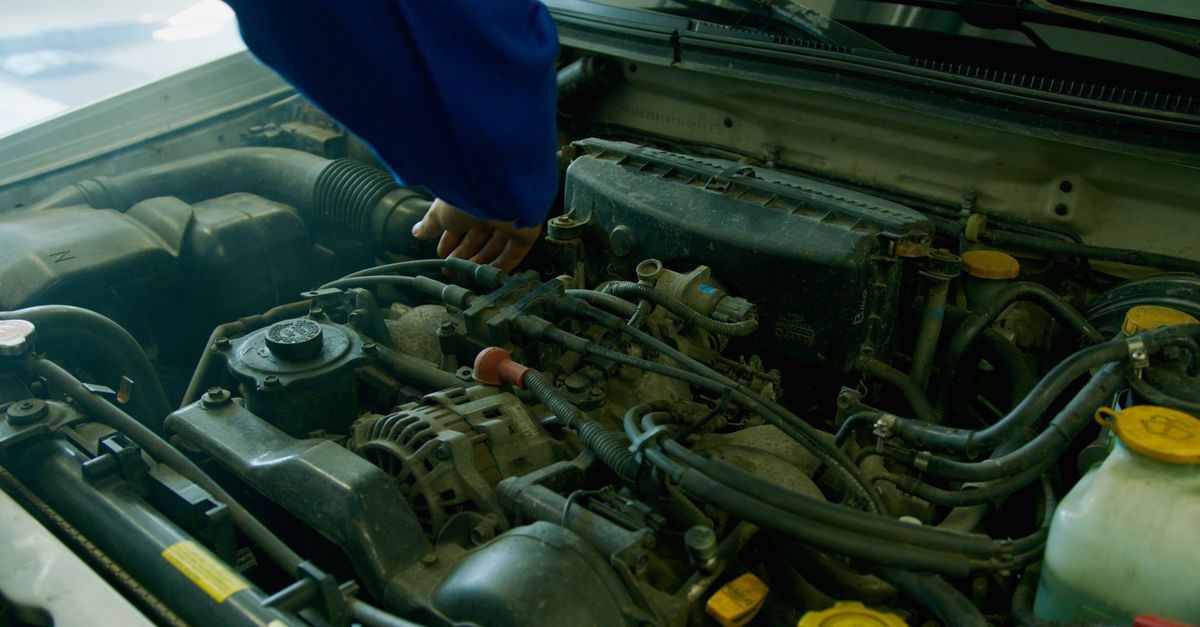
If your transmission has a dipstick and a drain pan, you can change the fluid yourself—if you know the torque specs, the refill procedure, and the exact ATF spec. Get any of that wrong and you’ll overfill, underfill, or use the wrong fluid. All three cause damage.
What you shouldn’t attempt:
- Sealed transmissions with no dipstick (requires vacuum fill equipment and a fluid temperature sensor)
- CVTs (extremely sensitive to fluid type and fill level)
- Any transmission with a burnt-smell diagnosis (you’re not fixing internal damage with a fluid swap)
- Transmissions with electronic or complex fill procedures (some require a scan tool to cycle the pump while filling)
A $50 DIY fluid change that’s done wrong costs $500–$3,000 to fix. If you’re not sure, pay the $250 and sleep fine.
What to tell the shop (so they don’t upsell you)
When you bring it in, say this:
“I need a transmission drain-and-fill with a new filter. Use the OEM-spec fluid—no substitutes. I don’t want a flush unless you can explain why it’s necessary on a [your mileage] transmission.”
If they push a flush or additives or a “deep clean,” ask for the reasoning in writing. Most of the time, they’ll back off. If they say your fluid is burnt and you need a rebuild, ask to see and smell the fluid yourself. You’ll know.
When color doesn’t matter
Some transmissions use dark synthetic fluid from the factory. If you pull a dipstick on a newer Ford, BMW, or Audi and see dark amber or brownish fluid, that might be normal. Check the owner’s manual or call the dealer parts desk with your VIN—they’ll tell you what the fluid is supposed to look like.
The smell test is universal. Burnt is burnt, regardless of color.
Pull your dipstick this week. If it’s dark and you’re past 60,000 miles, schedule service. If it smells burnt, tow it. The $250 service is cheaper than the $3,000 rebuild, and you’ll catch it before you’re stranded on the side of I-75 waiting for a flatbed.
General information, not professional mechanical or financial advice. Transmission diagnosis and service should be performed by a qualified mechanic. If you suspect transmission damage, have it inspected before driving.