
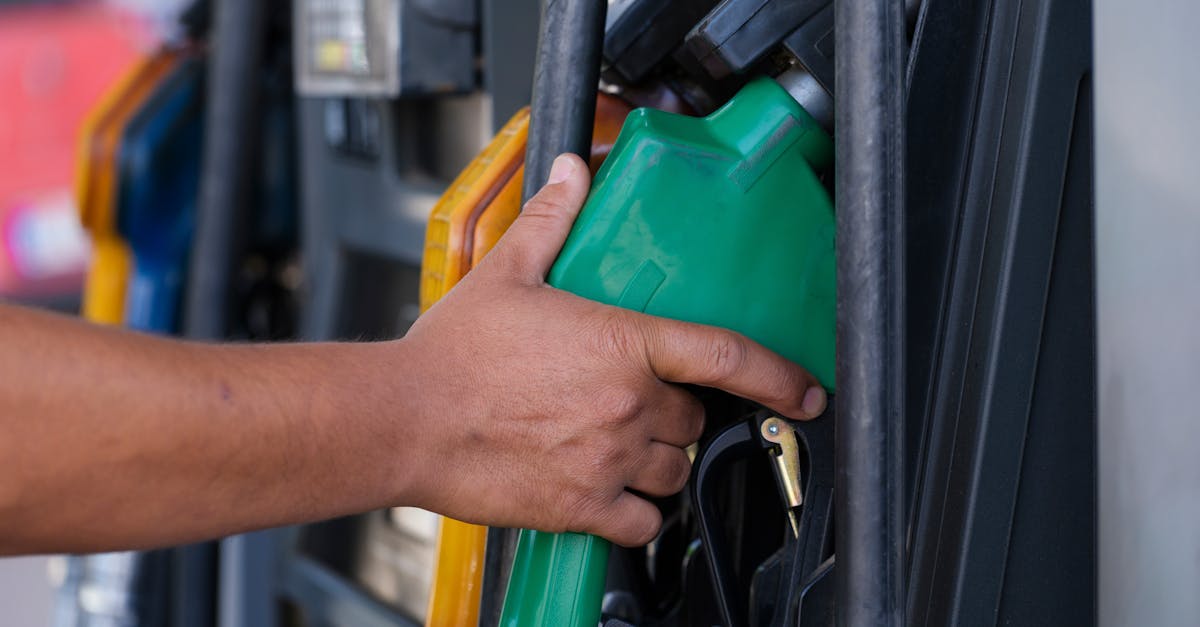
You’re staring at the pump. Regular is $3.15 a gallon. Premium is $3.75. That’s a $9 premium on a 15-gallon fill-up, and the question is whether you’ll get $9 worth of anything back — better fuel economy, smoother running, longer engine life. The short version: unless your owner’s manual says “premium required,” you won’t.
The short answer
Premium gas does not save money for vehicles designed to run on regular octane. AAA tested ten vehicles and found zero statistically significant fuel economy gain from premium fuel — the variation was within the ±1% test margin. You’ll spend an extra $288 per year (12,000 miles, 25 MPG) and get nothing measurable back.
What octane actually is
Octane is a number that measures one thing: resistance to engine knock. It’s not a quality rating, not a purity standard, not a measure of how “clean” the fuel burns.
The number on the pump — 87 for regular, 91 or 93 for premium — is the average of two lab tests: Research Octane Number (RON) and Motor Octane Number (MON). Higher octane fuel resists pre-ignition under high compression. That matters in turbocharged engines, high-compression sports cars, and engines designed to squeeze every bit of power out of a small displacement. It doesn’t matter in a naturally aspirated four-cylinder commuter engine designed around 87 octane.
Think of it as the fuel’s ability to wait for the spark plug before igniting. Low-octane fuel can ignite early from compression heat alone, causing knock — that metallic pinging you hear under load. High-octane fuel waits. If your engine doesn’t generate the compression to cause knock on 87, the extra waiting ability of 91 does nothing.
The fuel economy myth
The upsell goes like this: “Premium fuel burns cleaner and more completely, so you’ll get better mileage.”
AAA tested this claim in 2016 with ten vehicles rated between 19 and 32 MPG. The result: premium fuel showed no measurable economy gain. Variation stayed within ±1%, which is the margin of testing error — wind, temperature, driver behavior introduce more variation than that.
The EPA’s fuel economy testing protocols don’t show a default economy benefit for octane rating, either. If your engine is designed for 87 octane, 91 octane doesn’t burn “better” — it just resists knock better, a feature you’re not using.
The one exception: if your regular-octane vehicle is knocking on regular fuel, switching to premium may restore lost power and efficiency. But that’s a symptom of engine trouble — carbon buildup, a failing knock sensor, or the wrong fuel grade specification — not proof that premium delivers better economy. Fix the engine; don’t mask the problem with high-octane fuel.
Does premium gas save money? The cost-benefit math

Here’s the only calculation that matters if you’re trying to justify premium fuel on savings.
Three-year cost comparison (12,000 miles/year, 25 MPG)
| Fuel grade | Price/gallon | Annual cost | 3-year total |
|---|---|---|---|
| Regular (87) | $3.15 | $1,512 | $4,536 |
| Premium (91+) | $3.75 | $1,800 | $5,400 |
| Difference | +$0.60 | +$288/year | +$864 |
That’s $864 over three years. For premium to break even, you’d need to see a fuel economy gain from premium that offsets the higher price per gallon. The formula:
Break-even MPG gain = (Regular MPG × Price premium) / Premium fuel price
Using the numbers above:
- If you get 25 MPG on regular and premium costs $0.60 more per gallon, you’d need to gain 0.6 MPG on premium just to break even.
- Real-world testing shows 0–1% gain, or 0–0.25 MPG on a 25-MPG vehicle.
Premium doesn’t pencil out. The cost premium erases any efficiency benefit you might see, and most drivers won’t see one at all.
When premium is worth the cost
Premium gas is worth it in exactly one scenario: your owner’s manual requires it.
Check the manual or the sticker inside your fuel door. You’ll see one of three things:
- “Regular unleaded fuel only (87 AKI minimum)” — Use regular. Premium is a waste.
- “Premium fuel required (91 AKI minimum)” — Use premium. Your engine’s compression ratio or turbo boost needs the knock resistance. Cheaping out here will cost you in knock sensor replacements, valve damage, or worse.
- “Premium fuel recommended for best performance” — This is manufacturer-speak for “optional.” You can run regular safely; premium unlocks a bit more power. Whether that’s worth $288/year is your call, but it’s not a savings play.
Examples from the real world:
- Toyota Camry: regular (87 AKI). Premium does nothing.
- Subaru WRX STI: premium required (91+ AKI). High-compression turbo engine; regular will knock and damage the engine.
- BMW 340i: “premium recommended.” You can use 87, but the engine pulls timing to prevent knock, reducing power output. Still safe; just slower.
If your manual says regular, believe it. Engineers designed the engine around that octane. You’re not leaving performance on the table; you’re using the tool as intended.
What happens if you use the wrong octane
If you put regular in a premium-required car, you’ll hear knock — a metallic pinging or rattling under acceleration, especially uphill or under load. Modern engines have knock sensors that detect this and pull ignition timing to prevent damage, but that costs you power and, over time, can lead to sensor failure. Prolonged knock damages valves, pistons, and cylinder heads. Don’t do it.
If you put premium in a regular-octane car, nothing happens. The fuel burns the same; you’ve just paid extra for knock resistance your engine doesn’t need. It’s not harmful, just expensive.
Safety note: If you hear knocking on the fuel grade your manual specifies, don’t ignore it. That’s a sign of carbon buildup, a bad knock sensor, or incorrect fuel delivery. Have a mechanic diagnose it — continuing to drive with severe knock can crack pistons or burn valves.
The detergent upsell

Some stations advertise “premium fuel with advanced detergents” or “Tier 1 detergent gasoline.” Here’s the distinction that matters: octane rating and detergent package are separate things.
Detergent additives keep fuel injectors and intake valves clean. Top Tier gasoline is a voluntary standard that requires a higher detergent dose than the EPA minimum, and it’s available in regular and premium grades. Shell, Chevron, Costco, and others sell Top Tier fuel across all octane levels.
If you want detergent benefits, look for the Top Tier logo, not the premium-octane button. You can get clean injectors on 87-octane fuel. Paying for 91 octane doesn’t automatically get you better detergents unless the station explicitly sells Top Tier premium and you need the octane for your engine.
When to see a pro
If your vehicle knocks on the octane grade specified in your manual, don’t just switch fuels and call it fixed. Knock is a symptom. Possible causes:
- Carbon buildup on intake valves or combustion chambers (common in direct-injection engines after 60,000+ miles)
- Failing knock sensor
- Incorrect ignition timing
- Bad fuel batch (rare, but it happens)
A mechanic can pull diagnostic codes, inspect the knock sensor, and scope the combustion chamber to find the root cause. Masking knock with premium fuel when your manual says regular is like turning up the radio to ignore a grinding brake pad — it doesn’t fix the problem.
FAQ
Does premium gas actually save money?
No. For vehicles designed to run on regular octane, premium fuel costs $0.40–0.70 more per gallon and delivers no measurable fuel economy benefit. You’ll spend $288 more per year (12,000 miles, 25 MPG) with zero savings to offset it.
Is premium gas a waste of money?
Yes, unless your owner’s manual specifies “premium required” or “premium recommended” and you value the performance gain. For regular-octane vehicles, premium is pure cost with no return.
Do luxury cars always need premium?
No. Many BMW, Audi, and Mercedes models run fine on regular. The manual will say “premium recommended for best performance” if regular is safe but premium unlocks more power. Always check your specific model’s manual — don’t assume.
What’s the difference between premium and regular gas?
Octane rating. Premium is 91–93 octane, regular is 87. Higher octane resists engine knock (pre-ignition under compression). The fuel itself burns the same; octane just affects when it ignites under pressure. It’s not cleaner, higher-quality, or better for your engine unless your engine needs the knock resistance.
Your owner’s manual is the authority. If it says regular, use regular and pocket the $288 per year. If it says premium required, use premium and skip the knock-sensor repair bills. And if you’re chasing fuel economy gains, premium gas won’t get you there — look at tire pressure, driving habits, and maintenance instead. For more on what actually affects your mileage, see fuel-economy myths .
General information, not professional mechanical advice. Check your vehicle’s owner’s manual for manufacturer fuel recommendations. Consult an ASE-certified mechanic if you experience engine knock or performance issues.