

Your owner’s manual might say “every 2 years,” the dealer might say “every 3 years,” and the independent shop might say “only when it looks dark.” They’re all partially right, because brake fluid flush frequency depends on what you drive, where you drive it, and what the fluid condition test actually shows.
The short answer
Check your owner’s manual for your vehicle’s specific interval—most fall between 2 and 3 years regardless of mileage. But the smarter approach is to test fluid moisture content at those intervals and flush only when it crosses 3–4% water, which is when corrosion risk and boiling-point degradation accelerate.
Why manufacturer intervals vary so widely
There’s no industry standard because brake system designs, fluid specifications, and manufacturer liability tolerances differ. Here’s what the major brands actually recommend:
| Manufacturer | OEM flush interval | Notes |
|---|---|---|
| Toyota | 2 years or 20,000 miles | Model-dependent; check your specific manual |
| Honda | Every 3 years | No mileage limit specified |
| Ford | Every 3 years or 30,000 miles | Varies by model line |
| BMW | Every 2 years | Strict interval regardless of mileage |
| Subaru | Every 2 years or 30,000 miles | All-wheel-drive models |
| GM/Chevy | Every 2 years or 50,000 miles | Model-dependent |
The variation comes down to engineering conservatism. BMW and Toyota set tighter intervals; Honda and Ford give more room. None of them are guessing—each interval reflects how their specific brake systems handle moisture absorption over time, as verified through their own durability testing.
Your manual is the baseline. The condition test is the reality check.
How to tell if you need a flush now
Brake fluid is hygroscopic, meaning it pulls moisture out of the air through microscopic pores in brake hoses and around reservoir caps. That moisture doesn’t just dilute the fluid—it lowers the boiling point and corrodes metal brake lines, calipers, and the master cylinder from the inside.
The question is: how much moisture is too much?
Visual check (free, limited accuracy):
- New brake fluid: clear to pale yellow
- Acceptable: light amber
- Flush now: dark brown or black
Dark fluid signals contamination or age, but clean-looking fluid can still be saturated with water. That’s where testing comes in.
Moisture content test (professional, $0–$20):
Most shops use a handheld brake fluid tester or test strips that measure water percentage. Here’s the decision framework commonly used in the industry:
| Moisture content | Action | Why |
|---|---|---|
| <2% | Safe to wait 6–12 months | Minimal corrosion risk; boiling point still high |
| 2–3% | Schedule flush within 3–6 months | Corrosion accelerating; boiling point dropping |
| 3–4% | Flush immediately | Critical threshold for performance and safety |
| >4% | Flush + inspect brake system | High corrosion risk; may need component replacement |
Many independent shops include a free moisture test with a brake inspection. If they don’t offer it, ask—it costs them almost nothing and saves you from flushing on a fixed schedule when your fluid is still clean.
Pedal feel check (qualitative):
A spongy or soft brake pedal can indicate moisture in the lines, though it can also signal air leaks or worn components. Either way, it means a shop visit.
Real brake fluid replacement cost

The national range for a standard brake fluid flush runs $100–$300, but that spread hides important detail. Here’s what actually drives the price:
| Service type | Independent shop | Chain shop | Dealership |
|---|---|---|---|
| Flush (sedan/coupe) | $120–$200 | $150–$250 | $250–$400 |
| Flush (SUV/truck) | $150–$250 | $180–$300 | $300–$450 |
| Moisture test only | $0–$20 | $15–$30 | $30–$50 |
| Top-up (no flush) | $20–$50 | $30–$60 | $50–$100 |
Source: Kelley Blue Book brake service cost estimates aggregated across regions and service types.
What’s included in the labor:
A proper flush involves bleeding all four wheels, removing old fluid from the master cylinder, refilling with fresh DOT-spec fluid, and checking for leaks. It’s a 45–90 minute job depending on the vehicle and whether the car has ABS (which requires careful bleeding to avoid air in the modulator).
Parts cost vs. labor cost:
Brake fluid itself is cheap—$10–$30 for a liter of DOT 3 or DOT 4, and most cars need 1–2 liters. You’re paying for the technician’s time and the shop’s liability. The brake system is safety-critical, so shops charge accordingly.
Why dealerships cost more:
Higher labor rates (often $150–$200/hour vs. $80–$120 at independents) and OEM-spec fluid requirements. The fluid spec matters—mixing DOT types or using the wrong boiling-point rating voids warranties and can damage ABS systems. Your owner’s manual specifies DOT 3, DOT 4, or DOT 5.1; follow it exactly. Per FMVSS 116, these standards are not interchangeable—DOT 3 has a minimum dry boiling point of 401°F and wet boiling point of 284°F, while DOT 4 runs higher.
What shortens the flush interval
The 2–3 year baseline assumes normal commuting in a temperate climate. These factors compress the timeline:
Heavy braking and towing:
Trailer towing, mountain driving, or track use generates far more brake heat. That heat cycles the fluid harder and accelerates moisture absorption. If you tow regularly or drive steep grades, consider flushing every 12–18 months instead of 24–36.
Regional humidity:
Coastal and tropical climates introduce more atmospheric moisture. Brake fluid in a car parked near the ocean will hit 3% water content faster than the same car parked in Arizona. I’d shorten the interval to 18–24 months in consistently humid environments.
Vehicle age:
Older cars (10+ years) with original brake lines benefit from more frequent flushing even if the fluid tests clean. Internal corrosion builds slowly, and preventive flushing at 18-month intervals buys time before you’re replacing rusted calipers or wheel cylinders.
Recent brake work:
If you’ve had calipers, wheel cylinders, or brake lines replaced, the system was drained and partially refilled. Note that service date—you’ll want a flush sooner rather than resetting to your original OEM interval.
What happens if you skip it
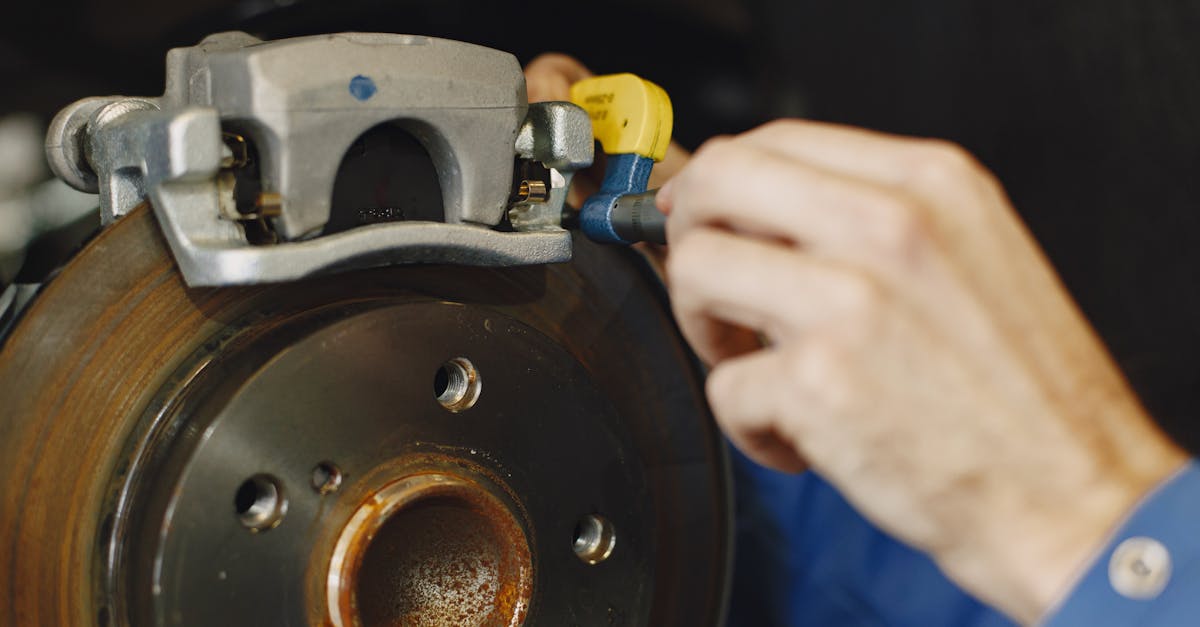
The risk isn’t immediate brake failure—it’s gradual degradation that you won’t feel until it’s expensive.
Corrosion of internal components:
Moisture causes rust inside the master cylinder, brake lines, calipers, and wheel cylinders. These are steel and cast-iron parts; they corrode from the inside out. A $180 preventive flush beats a $600–$1,200 master cylinder or caliper replacement.
Brake fade under hard braking:
As water content rises, the fluid’s boiling point drops. DOT 3 fluid starts at 401°F dry but falls to 284°F when saturated with moisture. Hard braking on a mountain descent or emergency stop can boil the fluid, creating vapor bubbles that compress instead of transmitting pressure. The pedal goes soft, braking performance drops, and in the worst case, you lose brakes entirely.
Warranty complications:
Some manufacturers void brake-system warranties if service records don’t show interval-compliant flushing. That’s rare, but it happens—especially on higher-end European brands with strict maintenance requirements.
The cost-benefit math:
Flushing every 2 years costs roughly $150–$200 per cycle. Skipping it saves that cost in the short term but raises the odds of a $500–$1,000+ repair bill later. The question is whether your fluid condition and driving justify the gamble. A moisture test answers that question for $0–$20.
Why DIY flushing is not recommended
Topping up the reservoir to the “max” line is safe and simple if the level is low—just match the DOT spec on the cap. But a full flush is a different story.
The brake system is safety-critical. Improper bleeding leaves air in the lines, which compresses under pedal pressure and kills braking power. Even experienced home mechanics struggle with ABS-equipped cars, which require specific bleeding sequences to avoid trapping air in the modulator.
The tools—pressure bleeders, one-way valves, and brake bleeder boxes—cost $100–$300 to buy or rent. Contamination from dust or debris can damage the ABS module, which costs $1,000+ to replace. And if your DIY job causes an accident, your insurance may deny the claim.
The $120–$200 labor cost at a shop is cheap insurance compared to fixing a botched flush or rebuilding a brake system. This is one of the services where the professional liability and equipment justify the price.
FAQ
Do I really need a brake fluid flush?
Yes, for safety—but frequency depends on your car’s OEM interval, fluid condition, and driving. A moisture test tells you whether you need it now or can wait another year.
Can I just top up my brake fluid instead of flushing?
Top-ups address fluid level; flushes address age and moisture content. If your level is low, topping up is fine short-term, but if the fluid is old or contaminated, you still need a flush.
What happens if I never flush brake fluid?
Moisture buildup corrodes brake lines, calipers, and the master cylinder from the inside. Boiling point drops, raising the risk of brake fade or failure under hard braking. Repair costs escalate from $150 preventive service to $600+ corrective repairs.
Is brake fluid flush a dealership upsell?
Sometimes. The service itself is legitimate and safety-critical, but it’s also a common upsell at quick-lube chains and dealerships. Check your OEM schedule first, then decide based on actual fluid condition—not a sales pitch.
How much does a brake fluid flush cost?
$100–$300 depending on vehicle type, location, and shop. Independent mechanics typically charge $120–$200 for a sedan; dealerships run $250–$400. Get quotes from multiple shops and confirm they’re doing a full system bleed, not just a reservoir top-up.
Brake fluid doesn’t wear out on a fixed clock—it degrades when moisture content crosses the safety threshold. Follow your manual’s interval as the baseline, test fluid condition when you’re unsure, and adjust the schedule based on how and where you drive. The cost of getting it right is a $150 flush every few years; the cost of guessing wrong is a brake system rebuild.
General information, not professional mechanical or financial advice. Consult a certified mechanic for brake system service and safety decisions.