

The TPMS light comes on. You pull over, eyeball the tires—they all look fine. You keep driving. Two days later it’s still glowing. You check the pressure at a gas station, the gauge says 30 PSI, close enough, right? The light stays on. Now you’re wondering if the dealer is about to sell you a $400 sensor replacement you don’t need.
The short answer
The tire pressure monitoring system light means one or more tires have dropped roughly 25% below the manufacturer’s recommended cold pressure—usually 4 to 8 PSI low. This threshold is mandated by the NHTSA’s tire pressure monitoring system standard. Check all four tires with an accurate gauge before the car has been driven, inflate to the pressure listed on the driver’s door jamb (not the tire sidewall), and the light should reset after 20 minutes of driving.
What TPMS actually is
The tire pressure monitoring system became mandatory on all US vehicles sold after 2007, thanks to an NHTSA safety mandate aimed at reducing blowouts and fuel waste from underinflated tires.
There are two types, and the difference matters when diagnosing why your light is on:
Direct TPMS uses a battery-powered sensor mounted inside each tire, transmitting pressure readings wirelessly to your car’s computer. Most vehicles since 2008 use this system. The sensors run on coin-cell batteries that typically last 7 to 10 years—closer to 5 to 7 years in hot climates where temperature cycling accelerates battery drain. After that, they die and the entire sensor assembly needs replacement. According to Kelley Blue Book, sensor replacement runs $150 to $400 per wheel depending on whether you’re at a dealer (high end) or an independent shop with aftermarket parts (low end). That’s parts, labor, mounting, balancing, and programming combined.
Indirect TPMS piggybacks on your anti-lock brake system’s wheel-speed sensors. When a tire loses pressure, it has a smaller diameter and spins slightly faster than the others. The car notices the speed difference and triggers the warning. No extra hardware in the tire, no batteries to die. Less common on newer cars, but still found on some budget models.
Why the light came on

Nine times out of ten, it’s low pressure. The light triggers when any tire drops about 25% below the recommended cold pressure. If your door jamb says 32 PSI, the light comes on around 24 PSI or lower.
Natural pressure loss: Tires lose 1 to 2 PSI per month just sitting there. Rubber is porous. If you haven’t checked pressure in six months, you’re probably down 6 to 12 PSI without realizing it.
Temperature drop: For every 10°F the temperature falls, tire pressure drops 1 to 2 PSI. Here’s the math on a typical scenario: a sedan inflated to 32 PSI at 75°F in July will read 26 to 28 PSI at 35°F in January—a 40°F drop means 4 to 8 PSI lost to temperature alone. That’s enough to trip the TPMS threshold without a leak. Add in the natural monthly loss, and you’re looking at a winter warning light almost guaranteed if you don’t top off pressure in the fall.
Slow leak: A screw, thorn, or worn valve stem can bleed air slowly over days or weeks. You won’t see it, but the sensor will.
Sensor or battery failure (direct TPMS only): If the sensor’s battery is dead or the sensor itself has failed, the system can’t read that tire’s pressure and assumes the worst. This is the scenario dealers love because it means parts and labor. But it’s also the least common cause.
The door-jamb vs sidewall trap
Here’s where people get burned: the recommended tire pressure is printed on a label on the driver’s door jamb or fuel door, not on the tire sidewall.
The sidewall number—say, 44 PSI—is the tire’s maximum rated pressure, the upper limit before it risks damage. It is not your target. Dealers and quick-lube shops know this, and some will quietly inflate to the sidewall max to avoid comeback complaints. Overinflated tires wear faster in the center and ride harsher, but the TPMS light stays off, so the customer leaves happy. For a week.
Your target is the door-jamb pressure, usually 30 to 35 PSI for sedans, 32 to 38 PSI for SUVs and trucks. Check it when the tires are cold—before you’ve driven, or at least three hours after the car has been parked. Driving heats the tires and temporarily raises pressure by 2 to 4 PSI. If you inflate to 32 PSI after a highway drive, you’ll be at 28 PSI the next cold morning.
According to EPA guidance on tire maintenance, proper tire pressure improves fuel economy by up to 3% and extends tire life. Underinflation does the opposite and increases blowout risk on hot pavement or long highway stretches.
Spare tire and TPMS behavior
Here’s a scenario that sends people back to the dealer unnecessarily: you swap in your spare after a flat, the TPMS light stays on or starts flashing, and you assume the spare is also low or the system is broken.
Most spare tires—compact donuts, older full-size spares, and even some modern temporary spares—do not have TPMS sensors installed. The system expects four sensor signals. When it gets three, it throws a warning or flashes the TPMS light to indicate a sensor fault, not low pressure.
What to expect:
- Compact donut spare (most common): TPMS light stays solid or flashes. This is normal. The spare has no sensor. Drive to a tire shop, get the flat repaired or replaced, reinstall the original wheel, and the light resets after 20 minutes of driving.
- Full-size spare with a sensor: If your spare is a full-size wheel with a matching sensor, the light should turn off once the system recalibrates—usually within 10 to 20 minutes of driving. If it doesn’t, the spare’s sensor battery may be dead (spares sit unused for years), or the spare is underinflated. Check the pressure; spare tire specs are also listed on the door jamb or in the owner’s manual.
- Manual reset required: Some vehicles require a manual TPMS reset after a tire swap, even if the spare has a sensor. Check your owner’s manual for the reset procedure—usually a button in the glovebox or a menu option in the dashboard display.
If the light is flashing rapidly (not just staying solid), that indicates a system malfunction, not just a missing spare sensor. Get it scanned at a shop.
How to diagnose: pressure or sensor?
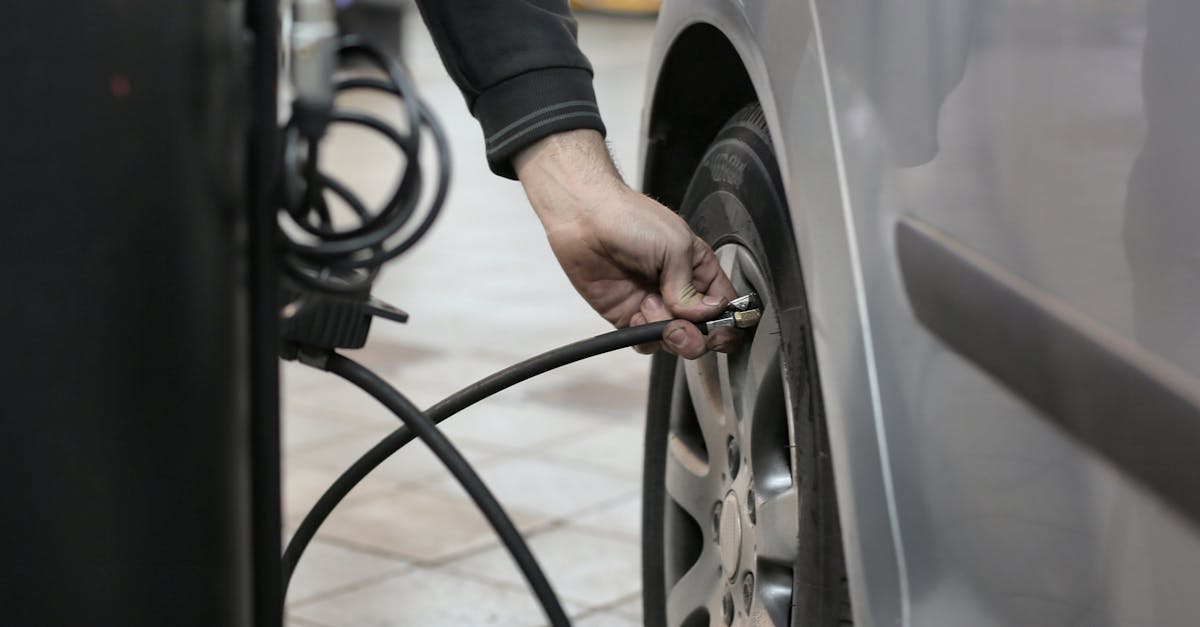
Step 1: Check all four tire pressures manually with a digital gauge (not the gas station’s wall-mounted dial, which is often inaccurate). Compare to the door-jamb spec.
- If one or more tires are 4+ PSI low: add air, drive 20 minutes. The light should reset. If it doesn’t, your car may require a manual reset via the dashboard menu—check your owner’s manual.
- If all four are within 2 PSI of spec: proceed to Step 2.
Step 2: If pressure is correct but the light stays on, suspect a sensor. A basic OBD-II code reader ($25 to $100 online) can pull TPMS fault codes and tell you which tire’s sensor is failing. Most auto parts stores will scan it for free.
Step 3: If a sensor is confirmed dead, you have two options:
- Dealer replacement: $200 to $400 per sensor, including parts, mounting, balancing, and programming. Dealers mark up sensors aggressively because they know you’re stuck.
- Independent shop or DIY: Aftermarket direct sensors run $40 to $80 each. Add $20 to $30 per tire for mounting and balancing if you don’t have a tire machine. The sensor has to be programmed to your car’s VIN, which requires a TPMS tool or a trip to a shop with one. All in, you’re looking at $150 to $250 per sensor at an independent shop—still cheaper than the dealer, and the parts are fine. Consumer Reports testing shows most quality aftermarket TPMS sensors match OEM longevity and accuracy.
If your car is older than 2015 and you’ve never replaced TPMS sensors, expect them to start failing. The batteries don’t last forever, and once one goes, the others often follow within a year or two.
When it’s actually dangerous
Low tire pressure increases rolling resistance, kills fuel economy, and generates heat. On a long highway drive in summer, an underinflated tire can overheat and blow. If the TPMS light comes on while you’re driving and you notice the car pulling to one side, or if you hear a thumping sound, pull over immediately and inspect visually. You may have a flat in progress.
If the light is on but the car drives normally, you’re safe to drive to a gas station or tire shop—just don’t delay. A tire at 24 PSI won’t explode in your driveway, but it will wear unevenly and cost you money the longer you ignore it.
FAQ
How do I turn off the TPMS light?
Inflate all four tires to the cold pressure listed on the driver’s door jamb, then drive for 20 minutes. The system recalibrates and the light should turn off. Some cars require a manual reset via the dashboard or a button in the glovebox—check your owner’s manual if the light persists after correcting pressure.
Is it safe to drive with the TPMS light on?
Short-term, yes—drive to a gas station or mechanic immediately. Long-term, no. Low pressure increases blowout risk, especially on hot pavement or at highway speeds, and reduces fuel economy by 3% or more. Fix it within a day.
Can a bad TPMS sensor cause the light to stay on?
Yes. If tire pressure is correct across all four tires but the light won’t go away, a dead sensor or weak battery (in direct TPMS systems) is likely. An OBD-II scan will confirm which sensor failed.
How much does it cost to fix a TPMS sensor?
Dealers charge $200 to $400 per sensor including labor. Independent shops with aftermarket sensors run $150 to $250 per sensor, including mounting, balancing, and programming. Costs vary by location and vehicle, but the dealer is almost always the expensive option.
Does cold weather cause the TPMS light to come on?
Yes. A 10°F temperature drop lowers tire pressure by 1 to 2 PSI. In winter, check tire pressure monthly and add 2 to 3 PSI per tire compared to summer levels to account for colder ambient temperatures.
Why is my TPMS light on after I installed my spare tire?
Most spare tires—especially compact donuts—do not have TPMS sensors. The system detects a missing sensor and triggers a warning. This is normal. Once you reinstall the original tire, the light should reset after 20 minutes of driving.
If the light came on overnight after a cold snap, it’s almost certainly temperature-related pressure loss, not a sensor. Check the pressure before you spend money. If you’re not confident diagnosing it yourself, any tire shop will check for free—just make sure they inflate to the door-jamb spec, not the sidewall max.
This is general information, not professional mechanical or financial advice. Tire pressure and replacement costs vary by location and vehicle. If you suspect a safety issue with your tires (unusual wear, bulging sidewalls, vibration, or persistent low pressure), consult a certified mechanic immediately. For routine tire maintenance, see How to Check Your Tire Tread Depth in 3 Ways, How Often Should You Rotate Your Tires (and Which Pattern to Use), and Winter Car Maintenance Cost: Fluids, Tires & Real Numbers.